
2026 launch of Nuclear Weapons Ban Monitor: World Divided over Nuclear Weapons as Arsenals Grow and Ban Treaty Gains Ground
The findings of the 2026 edition of the Nuclear Weapons Ban Monitor, published by Norwegian People’s Aid in cooperation with the Federation of American Scientists, shows that the world is moving in opposing directions on nuclear weapons. A growing majority of States reject nuclear weapons as a threat to collective security and call for disarmament. However, the number of nuclear weapons available for use increased for the ninth consecutive year in 2025, while a minority of 42 countries are elevating their role in national defense.
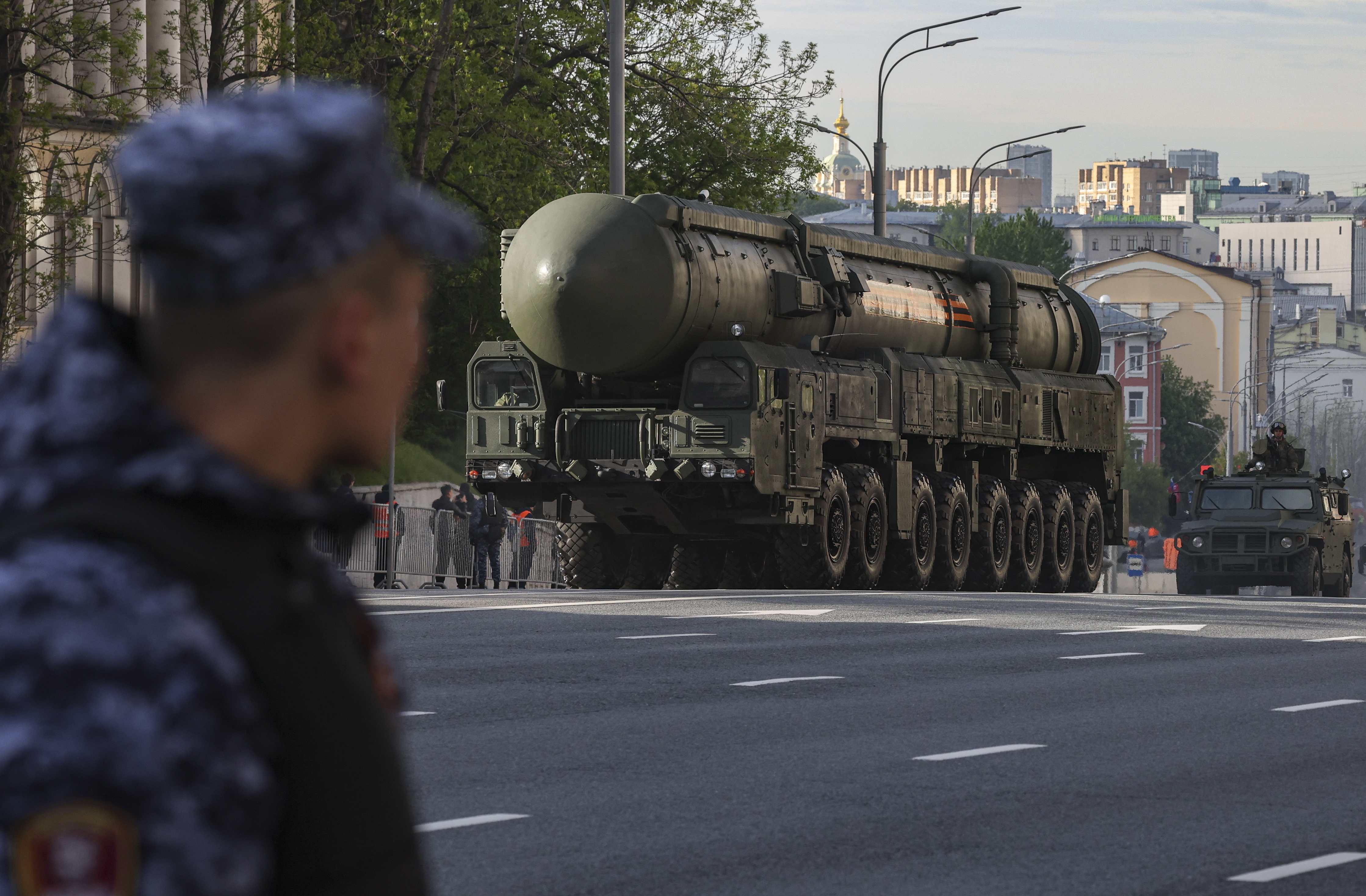
At the beginning of 2026, the number of nuclear warheads available for use by the armed forces of the world’s nine nuclear-armed states had risen to 9,745, with a combined explosive yield equating to more than 135,000 Hiroshima bombs, the report shows. This represents an increase of 141 warheads from the previous year and 473 since 2017, when the global total reached a low of 9,272. In total, nuclear-armed states were estimated to possess 12,187 warheads, including 2,442 retired warheads awaiting dismantlement.
“The number of warheads available for use has increased steadily since 2017 and is expected to continue to grow. China, India, North Korea, Pakistan, and Russia all continued to expand their nuclear arsenals in 2025. France has recently announced that it will increase the number of its nuclear warheads, and the United States also has plans to expand its arsenal. In addition, discussions about acquiring nuclear weapons or hosting another country’s weapons have intensified in several non-nuclear-armed states. There is no denying that this make the world more dangerous for us all,” says Hans M. Kristensen, Director of the Nuclear Information Project at the Federation of American Scientists and one of the main contributors to the report.
He notes that the number of nuclear warheads that are deployed on or with delivery systems also continued to increase in 2025. An estimated 4,012 warheads (more than 40% of the available warheads) are currently deployed and ready for use on missiles in siloes, mobile missile systems, submarines, and at bomber bases. The remainder are kept in reserve.
“France, Russia, the United Kingdom, the United States, and, to a lesser extent, now also China and India are believed to deploy nuclear warheads on delivery systems or at bomber bases. The continued annual rise in deployed warheads is a concerning development, increasing the risks of rapid escalation, miscalculation, and accidental use,” says Kristensen.
Secretary General Raymond Johansen of Norwegian People’s Aid adds that these developments are unfolding against a backdrop of intensifying armed conflicts, eroding arms control frameworks, and a weakening of the international rules-based order. “What we are witnessing is more than a new arms race. It is a reversal of hard-won constraints on nuclear dangers,” says Johansen.
Yet, in parallel, a different global trend is gaining strength. Support for the Treaty on the Prohibition of Nuclear Weapons (TPNW), which was negotiated in the United Nations in 2017, continues to grow. By the end of 2025, 99 states—just over half of the world’s 197— had joined the treaty as either parties or signatories, and further expansion appears likely in 2026.
“Having crossed the halfway mark, the TPNW is emerging as a mainstream global instrument. The growing support for this treaty reflects a broadening recognition that nuclear weapons pose a fundamental threat to global security, as well as growing demand for nuclear disarmament,” says Johansen. “It gives us hope.”
The minority of 42 states–the nine nuclear-armed States and 33 so-called “umbrella” states are placing increasing emphasis on the perceived value of nuclear weapons as a national security asset. Nuclear-armed states invest heavily in the modernization and expansion of their arsenals, while umbrella states actively support and reinforce these policies. The Nuclear Weapons Ban Monitor, which has published annual reports since 2018, observes that a growing number of umbrella states are becoming more directly involved in nuclear strike exercises and conventional support for nuclear operations.
Regional dynamics further illustrate the divide on nuclear weapons. Support for the TPNW is strong across most of the world, particularly in Africa and the Americas, while a minority of 44 states oppose the treaty. Three quarters of this opposition is concentrated in Europe, where 33 of 47 states opposed the treaty in 2025. This reflects the region’s disproportionate share of nuclear umbrella states: 29 of the world’s 33 (88%) are European. As a result, Europe stands out as a major obstacle to further progress toward universalization of the TPNW.
While the nine nuclear-armed States bear primary responsibility for exposing the entire world to unacceptable nuclear risks, the Nuclear Weapons Ban Monitor finds that policies endorsing and perpetuating nuclear armament are particularly widespread in Europe. Progress toward nuclear disarmament will therefore depend heavily on policy shifts within this region, concludes the report.
“The world stands at a critical juncture. The choices political leaders make in 2026 will be decisive,” says Johansen. “They must decide whether to view nuclear weapons as a collective threat or a national security asset. These choices should be guided by a clear understanding of the risks inherent in nuclear deterrence, including the ever-present potential for loss of control and catastrophic humanitarian consequences.
