Nuclear testing from decades ago continues to kill and devastate communities, a new report concludes
A landmark report released by Norwegian People’s Aid warns that past atmospheric nuclear tests are on course to cause at least two million additional cancer deaths worldwide — a stark reminder that the consequences of nuclear testing are far from historical. The report uncovers the ongoing global impacts of decades of nuclear testing and issues an urgent call for long-overdue action to support the victims and remediate contaminated environments.
“Past nuclear testing continues to kill today. We hope this report will strengthen the resolve to prevent nuclear weapons from ever being tested or used again. It is essential to protecting global public health,” says Raymond Johansen, Secretary General of Norwegian People’s Aid (NPA).
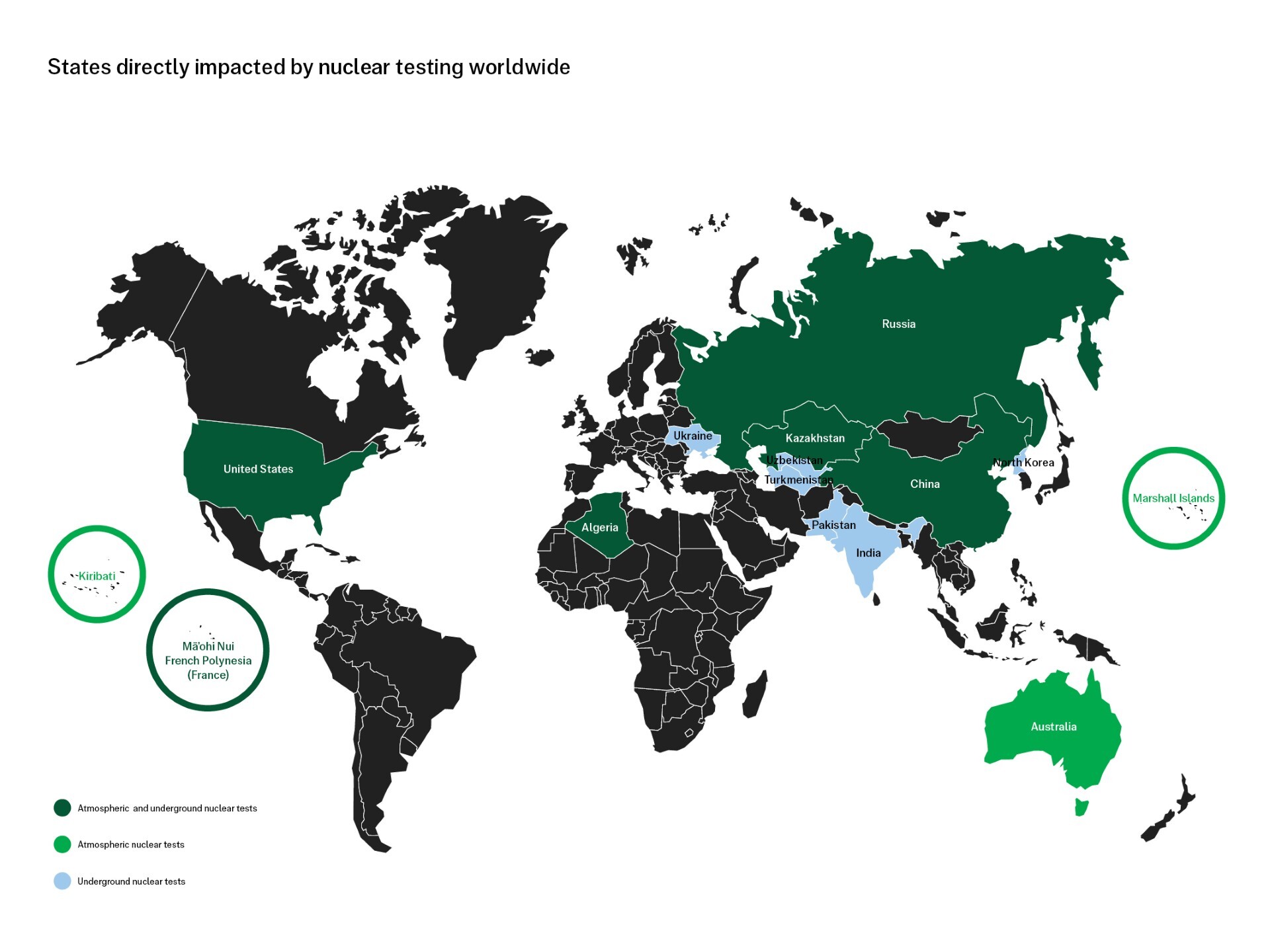
Between 1945 and 2017, more than 2,000 nuclear tests – both atmospheric and underground – were conducted at sites now located in 15 countries: Algeria, Australia, China, France (in Mā’ohi Nui/French Polynesia), India, Kazakhstan, Kiribati, the Marshall Islands, North Korea, Pakistan, Russia, Turkmenistan, Ukraine, the United States, and Uzbekistan. These states continue to experience long-lasting, and in many cases severe, impacts.
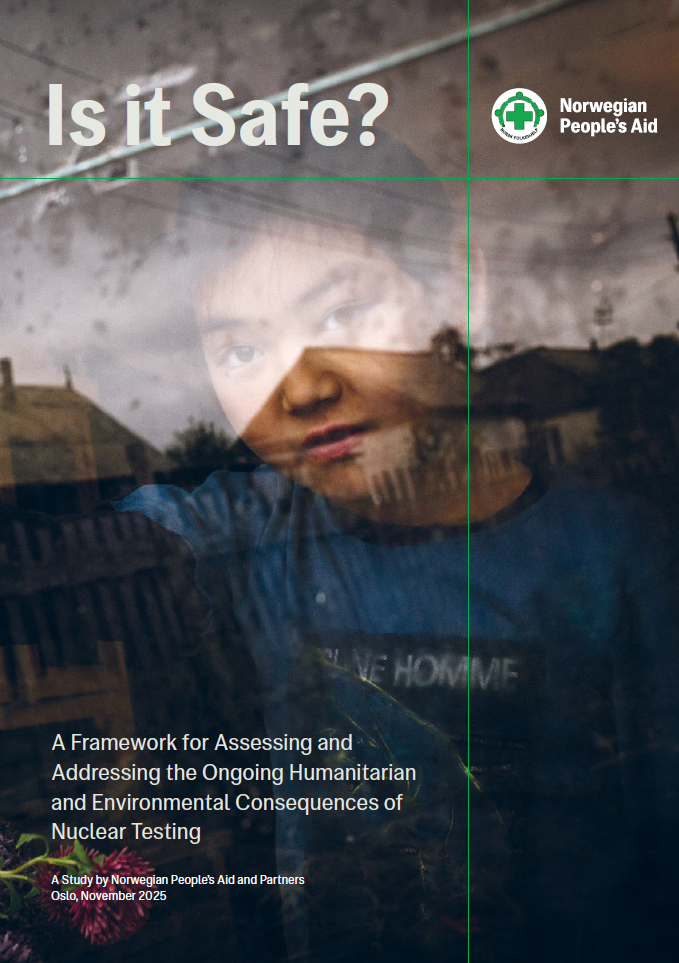
The heaviest burden has fallen on communities living near test sites, particularly Indigenous Peoples and populations in formerly colonized territories. The report published by NPA, ‘Is it Safe? A Framework for Assessing and Addressing the Ongoing Humanitarian and Environmental Consequences of Nuclear Testing,’ describes how survivors still face elevated rates of cancer, cardiovascular disease, congenital anomalies, and trauma — including from concern about potential health effects on themselves, their children and grandchildren. Displacement, loss of livelihood, and cultural disruption also continue. In some areas, land remains uninhabitable decades later — and climate change is now compounding these risks.
The impact from nuclear testing was and is, however, also global. Atmospheric tests between 1945 and 1980 dispersed radioactive material across the globe. Every person on Earth has been—and continues to be—exposed to some level of radiation from nuclear testing.
“The report presents new evidence on the impacts of nuclear testing and reinforces long-established findings that remain poorly understood by many stakeholders and the wider public. It is estimated that hundreds of thousands of people worldwide have already died from cancers and other illnesses resulting from past nuclear testing, and many more are expected to die in the future. Research indicates that the atmospheric tests alone are likely to cause at least two million excess cancer deaths over time, and a similar number of deaths from heart attacks and strokes,” says Dr Tilman Ruff, one of more than 20 leading scholars and experts from affected states who contributed to the study.
“Our collective research shows that the harm caused by nuclear testing is under-estimated, under-communicated, and under-addressed,” adds Professor Magdalena Stawkowski, one of the authors of the report’s case studies on Kazakhstan and Novaya Zemlya in Russia.
The study also documents a persistent culture of secrecy among the states that tested nuclear weapons – the United States, Russia, the United Kingdom, France, India, Pakistan, China, and North Korea, and likely also Israel. These governments have often minimized or concealed the harm their tests caused, leaving affected communities without the support they need. In Kiribati, for example, studies by the United Kingdom and the United States on health and environmental impacts remain classified to this day, preventing even the victims from learning about what was done to them. And in Algeria, authorities still do not know the precise sites where France buried radioactive waste, including plutonium, after its tests.
International responses have also been minimal. The report identifies a critical “mandate gap”: there is not a single international body tasked with assisting affected states to address the long-term consequences of nuclear testing. In most affected regions, comprehensive assessments of contamination, environmental remediation needs, and health risks have never even been conducted. Where assessments exist, their quality varies. Most communities affected by nuclear testing lack adequate healthcare and many lack basic measures like risk education — leaving people unaware of the dangers or how to protect themselves. The report underscores that radiation risk is not uniform: it is highest for very young children, decreases with age, and girls and women are impacted to a greater extent than are boys and men.
“The nuclear-armed states bear the primary responsibility for the ongoing harm from their tests. They must scale up their efforts now, to assess needs, assist victims and remediate environments. But the international community as a whole has long neglected the consequences of nuclear testing. It is high time for collective action. We have the tools, knowledge and expertise — what’s missing is political will,” concludes Secretary General Johansen.
The report makes the following main recommendations:
- Acknowledge historic harm and apologize: States that have tested nuclear weapons should publicly recognize and apologize for the lasting human and environmental harm they have caused. They should create or expand compensation mechanisms.
- Ensure transparency and release data: States that conducted nuclear tests should declassify and release relevant data to assist needs assessments, environmental remediation, and support for affected communities.
- Targeted international support: A framework of shared responsibility is necessary. The affected countries themselves should take the lead in assessing and addressing ongoing harm, but with support from other countries. International support to Algeria, Kazakhstan, Kiribati, the Marshall Islands and Mā’ohi Nui (French Polynesia) should be a priority, as they are among the most affected and least resourced.
- Close the mandate gap: Existing intergovernmental organizations, or a new dedicated international body, should be given the mandate to assist affected states with needs assessments, environmental remediation and victim assistance. A dedicated stream of donor-supported humanitarian and development assistance is needed to comprehensively address the ongoing harm from nuclear testing.
- Humanitarian principles and meaningful participation: All efforts to address the impacts of nuclear testing must adhere to humanitarian principles and human rights standards, with meaningful participation of Indigenous and other affected peoples.
- More research on fallout crossing national borders: Coordinated international efforts should be launched to further assess the extent of global radioactive fallout from atmospheric nuclear testing.
- Prevent further nuclear harm: All States must refrain from ever detonating a nuclear weapon and adhere to the Comprehensive Nuclear-Test-Ban Treaty and other treaties that make testing or use unlawful.
For press inquiries, send an email to tnl@npaid.org