Sudan: Giving up is not an option
April 15th marks three years of war in Sudan. Eitezaz Bakri fights for the rights of Sudanese women from exile in Nairobi.
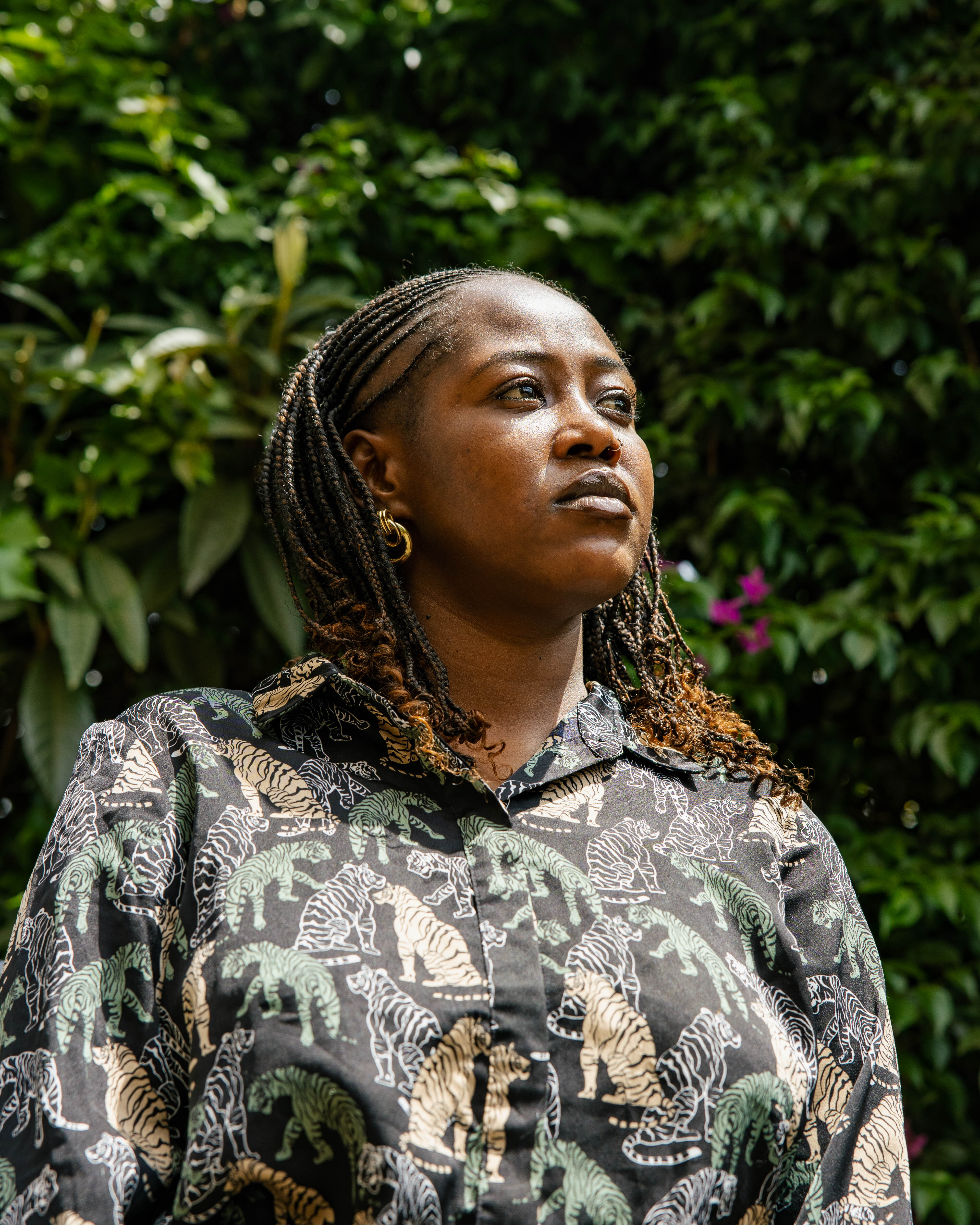
Text: Sabah Sanhouri
Photo: Altayeb Musa
Eatzaz Bakri is a Sudanese feminist and human rights defender from North Kordofan. Displaced by war, she continues to lead Taa Al-Ta'neeth, a grassroots feminist association she co-founded in Al-Ubayyid, now operating from exile in Kampala and Nairobi.
On the morning of April 15, 2023, Eatzaz Bakri was on Airport Street in Khartoum when Sudan's war began. She was supposed to travel home the very next day to celebrate Eid with her family in Al-Ubayyid, a four-hour drive away. Instead, she spent the next four days unable to leave her student dormitory, without electricity or water, cut off from her family, and unable to reach them by phone.
"The area was one of the first places to experience heavy shelling and clashes. Every time I felt I was about to fall apart, I would pull myself together," she says. "I kept telling myself that crying wouldn't solve anything - I needed to hold it together until I reached somewhere safe. After that, maybe I would have the luxury of falling apart."
That luxury has yet to come.
A Journey of 14 Hours
After four days trapped in her dormitory, Eatzaz began moving - carefully, street by street, assessing each route before taking it. From Airport Street to Mohammed Najib Street. Then to the Jabra neighbourhood. Then, finally, to the overland port.
"At every place I moved to, I had to stop and study the safest possible route forward - what I might face and how I would handle it," she explains.
What is normally a four-hour drive home to Al-Ubayyid became a 14-hour journey along a dangerous alternative route. When she finally arrived, the situation there was no better - the Rapid Support Forces (RSF) had attempted to enter the city multiple times, and life had nearly come to a standstill. Eitezaz began volunteering with an initiative supporting Al-Ubayyid Hospital, where doctors were on strike. Some days, when shelling broke out, she had to walk home - transportation stopped, and there was no other option.
Realising she would not be able to remain, she decided to travel to Uganda - initially thinking she would improve her English, take some courses, and return once the war ended. The journey to Kampala took nearly 15 days, delayed by severe congestion at the Renk border crossing into South Sudan. She coordinated with women she barely knew so she would not travel alone.
A Feminist Built by Resistance
Long before the war, Eatzaz had been navigating her own battles. As the only daughter in her family, she grew up under intense pressure - her university major was chosen for her, and societal expectations shaped the contours of her future without her consent.
"I realised that if I continued down this path, my entire life would be shaped by my family and I would have no mark of my own on it. I had been an excellent student before university, but I experienced a setback because I simply didn't love the field I was studying," she says.
It was during Sudan's revolutionary period that her path clarified. Becoming active in public life through the pro-democracy movement, she encountered peers who pointed her toward Feminism as a framework for the convictions she already held. She began reading - about feminist movements in Sudan and around the world - and soon found herself searching for an organisation that truly reflected her agenda as a young Sudanese woman.
"We couldn't find one, so we decided to create it ourselves" she says.
Building Taa Al-Ta’neeth
Taa Al-Ta'neeth - named after the Arabic grammatical marker of the feminine gender, making its very name a feminist statement - is a grassroots association founded by and for young women in Al-Ubayyid. Its mandate: building the capacity of young women in political participation, feminism, and related issues.
"We were all university students with no connections to civil society networks and no relationships that would attract donors," Eatzaz recalls. "We funded the simple activities ourselves - collecting small contributions from people we knew." Over time, they secured enough funding to open a physical headquarters: a space where young women in the city could gather, attend workshops, and participate in feminist education programmes.
The war ended that. The office closed for financial reasons. Then, the forces behind the conflict began targeting feminist organisations. Taa Al-Ta'neeth was among those whose registration was rejected and whose work was forcibly halted. Members of the executive committee were pursued, arrested, and brought in for interrogation.
"We suspended all activities that could put our volunteers and colleagues at risk" she says. The association now operates from Kampala - inside the city and in the Bweyale refugee camp in Kiryandongo - navigating unfamiliar laws, uncertain legal status, and the sudden severance of USAID funding that cut projects they were already implementing.
The Work That Reaches Them
From Kampala and Nairobi, Taa Al-Ta’neeth continues to deliver on the ground. The association runs capacity-building workshops for grassroots women’s groups, distributes dignity kits and food baskets, and holds psychosocial support sessions for women navigating the compounded trauma of war and displacement. It also runs advocacy workshops for young women on issues of security, peace, and women’s rights, and hosts feminist academies and schools for the next generation of women leaders.
When Eitezaz is asked what a meaningful moment of impact looks like, she describes something quiet and specific: the moment a woman who has received support conveys that a real need has been met - and shares her gratitude. “That feeling - knowing that there is an organisation that recognises their needs and is actively working to address them - that is the greatest concrete example of why this work matters,” she says.
Managing this from Nairobi is logistically possible - most of her tasks are administrative, and a stable internet connection and electricity are all she needs to function. But the distance carries its own cost. “It takes me further from understanding the complex realities on the ground,” she admits. “The experience feels incomplete. I am doing the work, but I am not fully inside it.”
The Weight of Survival
Displacement has come with a psychological toll that Eitezaz describes with striking clarity. The feeling, she says, is not simply fear - it is something harder to name.
"There is this idea of survivor's guilt - you are in a safe place with services, able to continue your work, while your family and friends are still inside Sudan, facing the unknown. And sometimes you lose contact with them for long stretches when there's no internet, no electricity. You don't know what the days ahead might bring. News could reach you that someone close has been wounded or has died."
She has never found the moment to break down - there has always been another challenge, another crisis, another reason to hold it together. She keeps working, she says, because it is the only thing that eases the guilt of having survived while leaving so many people behind.
"I see it as the only thing that can reduce my feeling of guilt for having survived" she says. "Every day brings new challenges, and their psychological impact - and their impact on the value of the work we are doing - is immense."
Hope and a Call to the World
What keeps her going, she says, is a quiet but firm conviction.
"Anything I do today - even if its results don't show tonight - may have an impact in the near future. That, along with the effect my work is already having on people who are in genuine need, is the greatest motivator keeping me going, even when it is mostly done on a voluntary basis."
She has a message for the international community.
"I want everyone to know our stories of daily resistance as Sudanese women. I want everyone to raise their voices in advocacy for an end to the war in Sudan - because this war has affected all of our lives, and it is pulling us into daily battles that are immensely difficult."
She hopes to one day return to Sudan and complete the dreams the war interrupted. Until then, she will continue building, from exile, the feminist future she has always believed in.
"My own personal stability is entirely tied to the end of the war in Sudan," she says. "I hope to see lasting peace as soon as possible."