
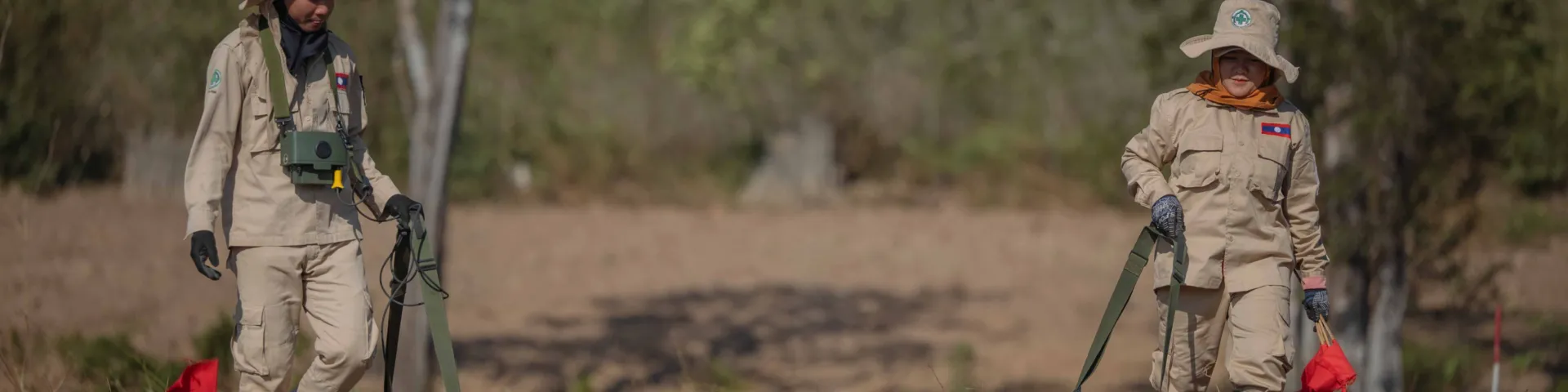
In the hills and farmlands of southern Laos, the legacy of war remains buried just beneath the soil. For many rural communities, unexploded ordnance (UXO) is not a distant memory, but a daily threat - one that limits movement, farming, and safety.
For Norwegian People’s Aid (NPA) teams working in Saravane, Champasak, Attapeu, and Sekong provinces, removing this threat is painstaking, physical and often dangerous work. But it is also work that delivers immediate, life-changing results.
On 12 January, an NPA clearance team safely destroyed a 500-pound MK82 aircraft bomb found in a cassava plantation in Ban Taen village, Ta-Oy district, Saravane province. The bomb was located just four kilometres from the nearest residential area.
Had it detonated, deadly fragments could have travelled up to 1.5 kilometres. Its destruction removed a potentially catastrophic risk to nearby families and farmers.
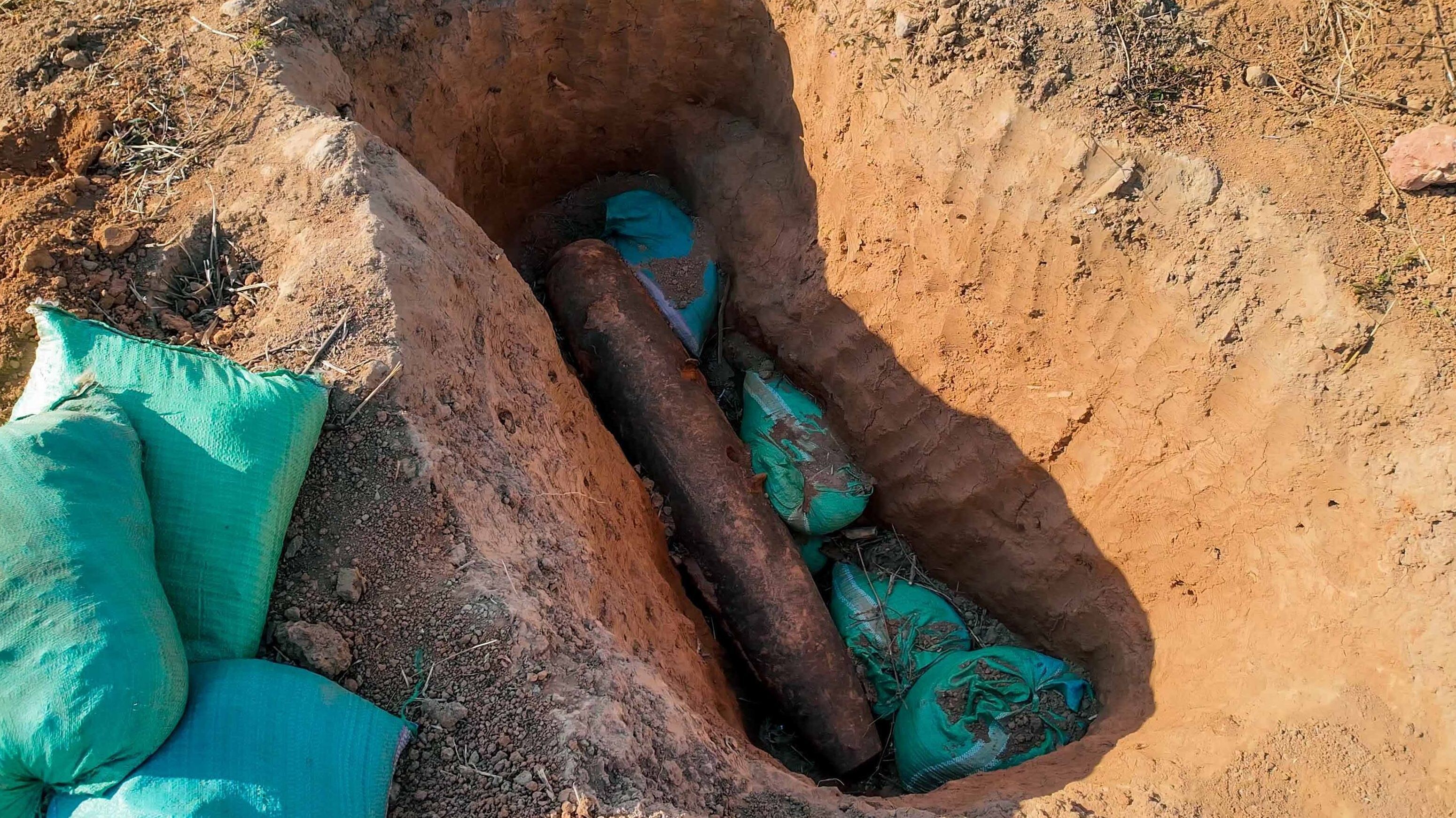
The operation was led by Bowling Sengsouliya, Technical Operations Coordinator, and formed part of a wider clearance task that has already seen ten items of unexploded ordnance safely destroyed. Once completed, more than 45,000 square metres of land used for rice and cassava cultivation will be returned safely to 37 villagers.
Reaching the Most Remote Areas
Clearing land in southern Laos is not simply a matter of detection and demolition. Reaching many task sites is an operation in itself.
Poor road conditions, deep water holes and steep mountain terrain often make access difficult—especially during the rainy season. In some locations, NPA teams must first build temporary bridges across streams or carve makeshift stairways into hillsides to safely reach contaminated areas. These access routes are critical, not only for daily work, but also to ensure a safe evacuation route in case of an accident.
Despite these challenges, teams continue to push forward, often working in dense forest and highly contaminated soil where metal fragments and steep slopes slow detection and demand constant focus.

From Fear to Freedom
For families living on contaminated land, clearance brings profound change.
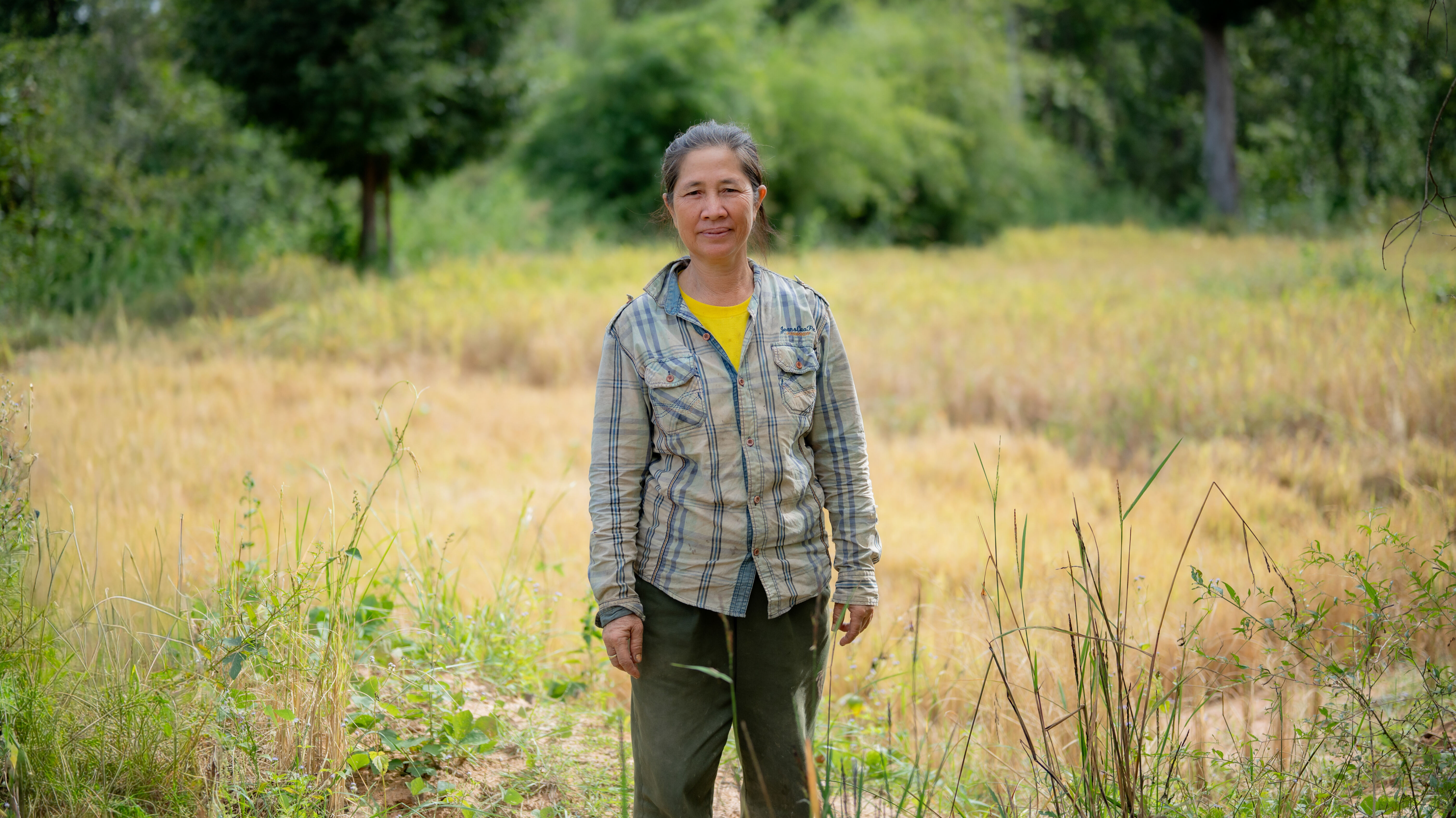
Mrs. Phetsamone Keosaythong and her family live in Phonbok village in Saravane provinceare, and are among the beneficiaries of NPA’s clearance work in the area. To date, 345 UXOs have been safely removed from the area.
“When we burned grass to prepare our fields, we often heard unexploded bombs go off,” said Mrs. Phetsamone Keosaythong.
Burning vegetation is a common farming practice in Laos, but when UXO remains underground, it can become deadly.
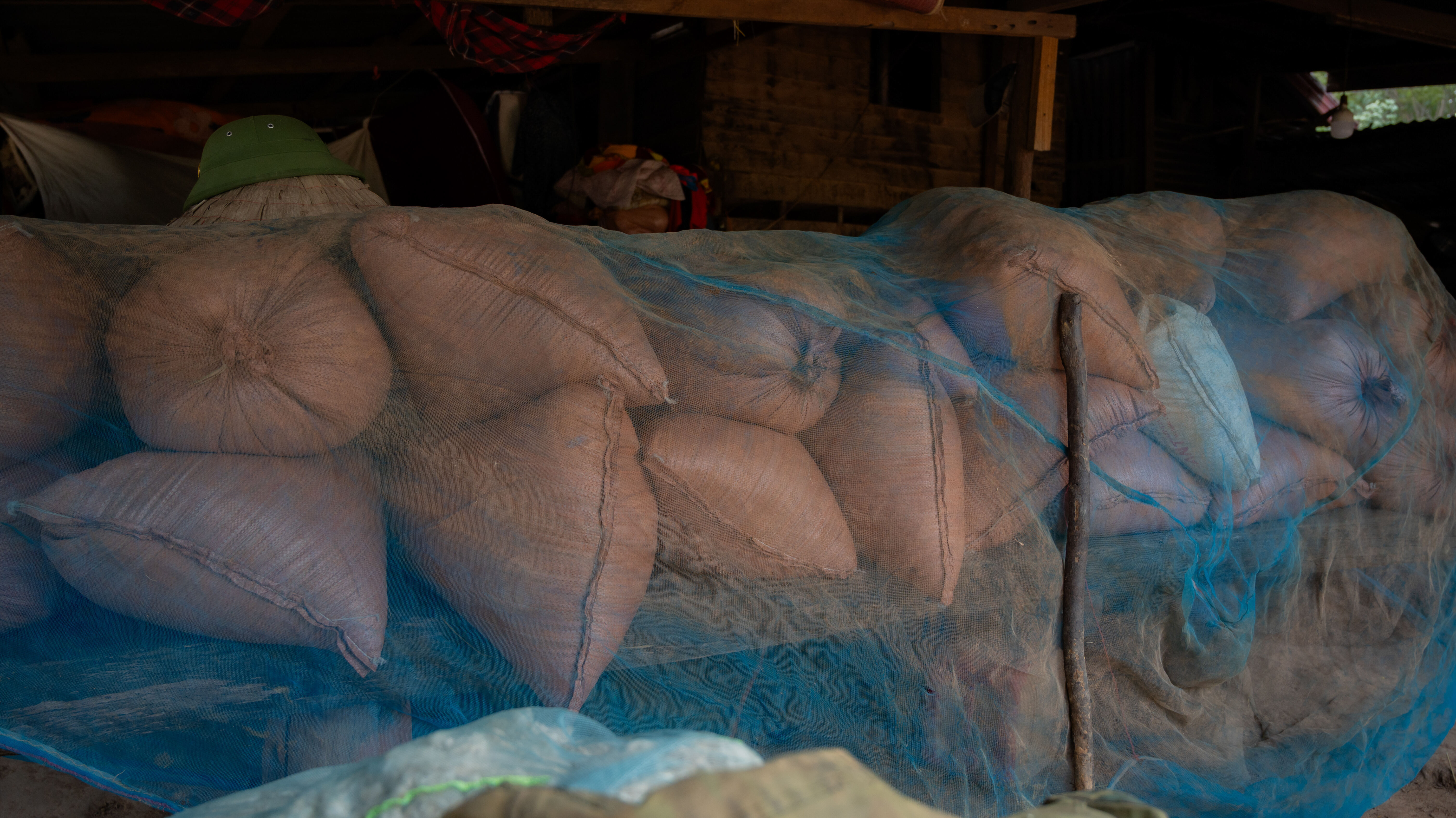
Today, her family farms with confidence. Rice fields have expanded, fruit trees such as banana, papaya and pineapple grow behind the house, and this year’s harvest included 21 sacks of rice—far more than was possible before clearance.
“In the past, we were afraid to let our children go far to play,” beneficiaries shared. “Now they can play safely on the cleared land. We are no longer afraid,” she says.
Advancing Mine Action through innovation and knowledge sharing
NPA is not only a mine action operator working to remove explosive threats from the ground. It is also an organisation that actively develops new methodologies and invests in sharing knowledge and best practice across its country programmes, an essential part of keeping mine action effective, safe and fit for purpose.
In December 2025, NPA Laos hosted the Southeast Asia Regional Workshop on Cluster Munition Remnants Survey (CMRS) in Vientiane, bringing together 33 participants from NPA programmes and national authorities across the region.
The two-day workshop provided a platform for practitioners and decision-makers to exchange experiences and lessons learned from CMRS implementation in different operational contexts.
The programme focused on how strong survey methodologies underpin effective clearance. Presentations covered the International Mine Action Standards (IMAS) Technical Note 08.20/02, national mine action standards, and the development of CMRS within NPA programmes in Southeast Asia. Discussions explored how national standards enable mine action operators to apply survey methodologies consistently, safely and with maximum impact.
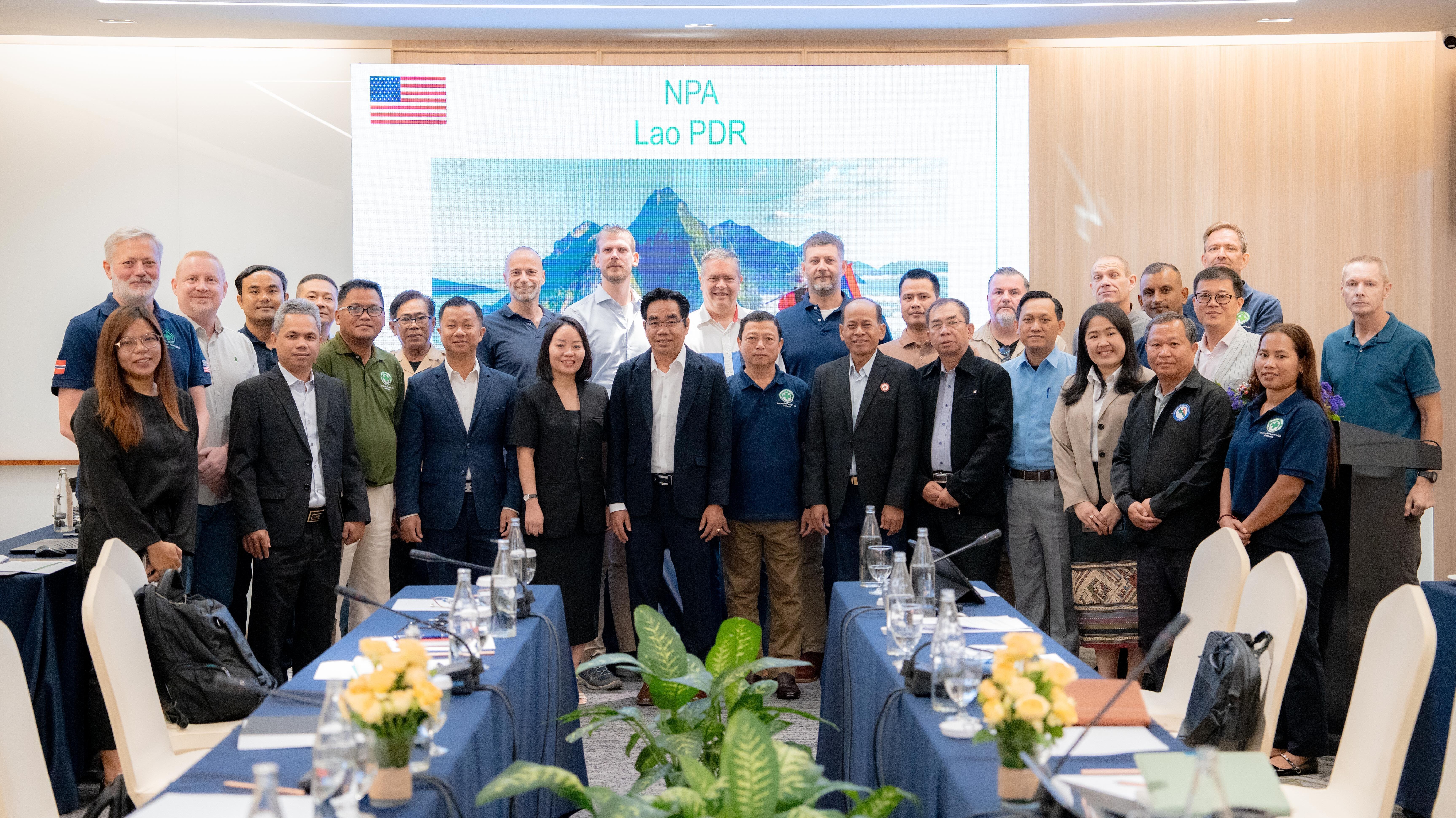
A dedicated session with national authorities examined the future of CMRS practice in the region, highlighting the importance of close collaboration between governments and operators to continuously improve Mine Action approaches.
For NPA, this kind of regional knowledge sharing is critical to maintaining high-quality operations across diverse and often challenging contexts.
“Mine action is not only about removing explosive hazards. It is also about continuously improving how we work,” said Aksel Steen-Nilsen, Director for Mine Action at Norwegian People’s Aid. “By developing new methodologies and systematically sharing experience and best practice across our country programmes, we strengthen safety, improve efficiency, and ensure that our operations remain fit for purpose in increasingly complex environments.”
By linking hands-on clearance with technical development and cross-country learning, NPA ensures that land released today is safe, and that its Mine Action programmes remain adaptive, innovative and relevant for the challenges of tomorrow.

Large-Scale Clearance, Lasting Impact
In Chavik village, Lamam district, Sekong province, one of NPA’s clearance teams has recently completed its third major task site in the area.
During operations, the team safely disposed of 399 cluster munition remnants and 85mm mortars. The work required patience, close teamwork and careful coordination with land users and local authorities.
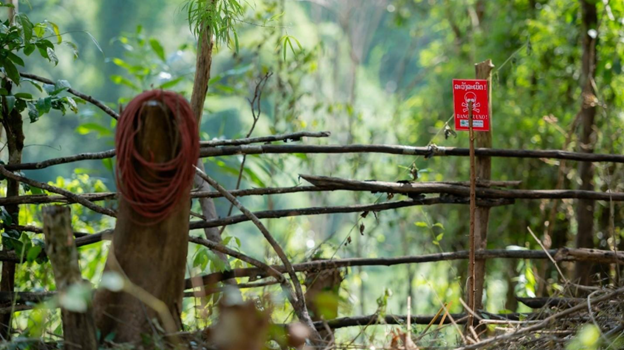

The team has recently completed clearance of more than 337,000 square metres of land that local families rely on to grow rice and cassava and to raise livestock.
Work at the site was carried out under demanding conditions. The area is densely forested, with steep hills and large amounts of metal debris in the ground. As Team Leader Nub Savongda explained, “these challenges made it hard to detect what we needed and slowed our progress, but everyone stayed focused on safety and did their work carefully.”
Close cooperation with the local community was also critical to the success of the clearance. Land users and local authorities provided strong support throughout the operation, helping the team complete the work smoothly and efficiently.
“Every UXO we remove reduces the risk to the people who live and work here,” Savongda said. Despite the progress made, heavy contamination remains across Laos, highlighting why clearance efforts are still essential.
Sustained Support Saves Lives
UXO contamination continues to affect livelihoods and safety across southern Laos. Clearing land allows families to farm, children to play, and communities to plan for the future without fear.
NPA sincerely thanks the Governments of the United States and Norway for their continued support. This support enables lifesaving clearance work across four southern provinces - helping release land, protect civilians, and restore livelihoods, one cleared field at a time.