
Peru has been the scene of one of the longest non-international armed conflicts in Latin America, which saw the Peruvian State confront organized armed groups – Shining Path (SL-Sendero Luminoso) and Tupac Amaru Revolutionary Movement (MRTA) – between 1980 and 2000. The armed conflict has left a balance of 69,280 victims dead and missing. In 1995, Peru also became involved in the short but intense Cenepa War with the neighboring country of Ecuador. These two conflicts have left areas and infrastructure contaminated by antipersonnel mines throughout the country, and especially in the Province of Condorcanqui- Amazon region at the border with Ecuador- where NPA is currently supporting the humanitarian demining.
Since 2000 and to date, Peru has experienced constant economic growth, under a fairly liberal economic model. Poverty- has been reduced from 50% to 20% between 2004 and 2019, and – today – Peru is one of the most stable economies in the region, despite ongoing political crises. However- as before and during the non-international armed conflict- the distribution of resources and powers continues to be unequal and unfair, in a context of criminalization of the right to protest, freedom of the press increasingly threatened, and a civil society that is too weakened to achieve a real impact on the protection of the fundamental rights denied to the population.
The progressive weakening of democracy and endemic corruption
are at the root of the multiple challenges that Peru faces today. Over the country- and in particular where NPA supports Humanitarian Demining- illegal economies – especially mining – have already irreversibly compromised the environment, generating a devastating impact on the local indigenous communities
bordering Ecuador, whose defenders are at high risk. The worrying increase in national and cross-border violence and organized crime is fueled by illegal trafficking and smuggling of weapons, often diverted from military and police institutions, and which has impacts on both rural communities and urban areas.
Programme
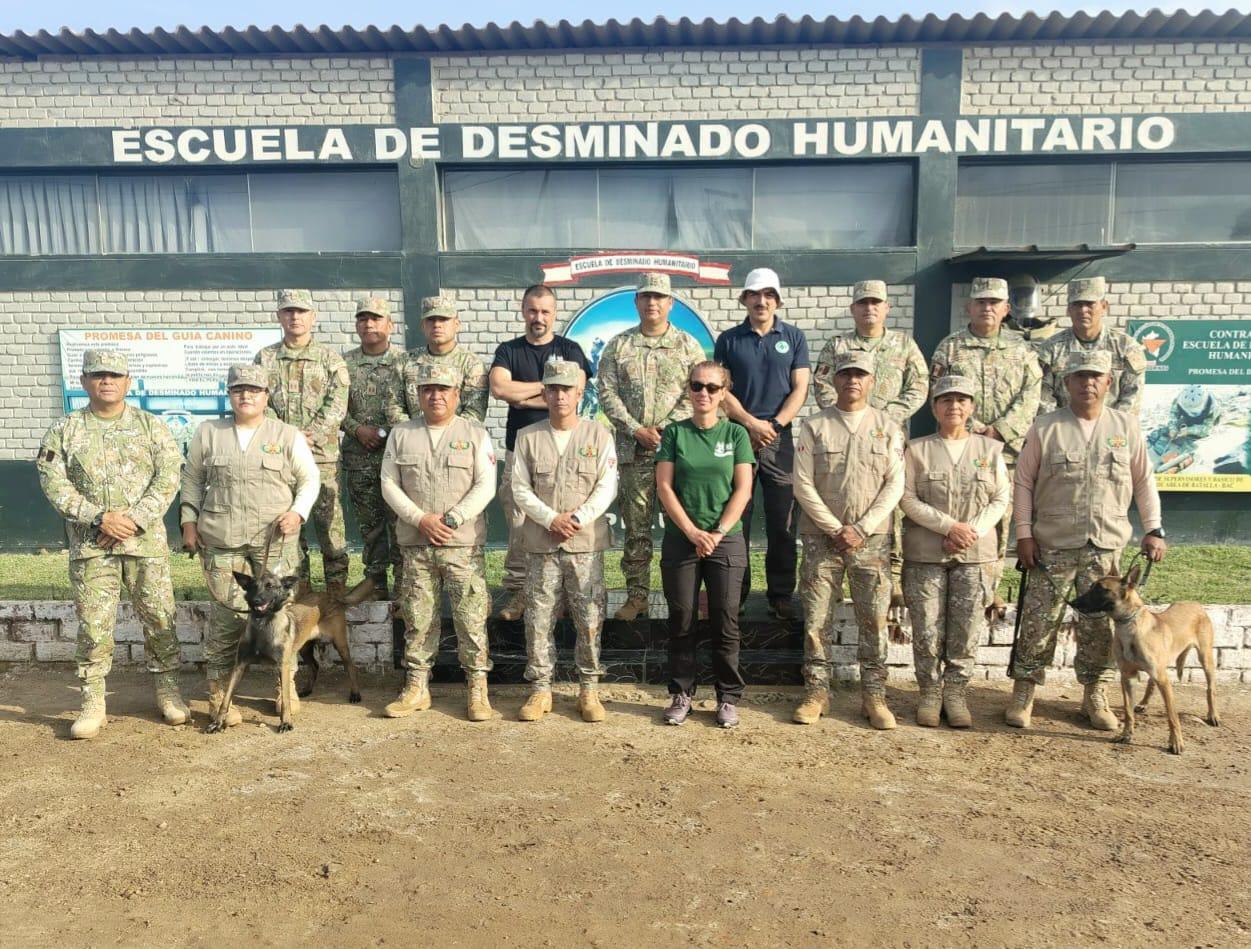
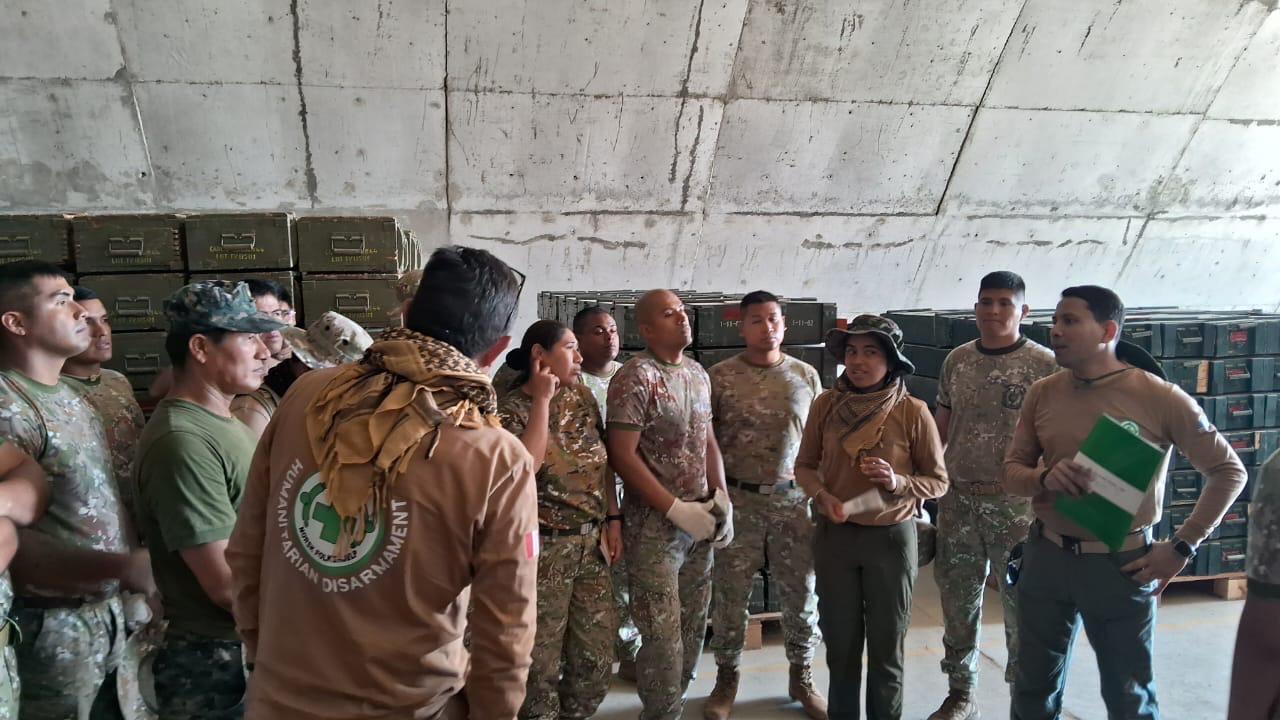
Since NPA Peru was established in 2018, the demining and disarmament program has worked with a full methodology of localization, supporting Peruvian Army units with capacity development, technical assistance and provision of essential equipment; with the aim to reduce the humanitarian consequences that scattered or stockpiled weapons and ammunition can have on the civilian population.
We work in close cooperation with Ministry of Defense and Ministry of Foreign Affairs, accompanying Peru towards the fulfillment of its obligations under ratified international treaties.
Humanitarian Demining
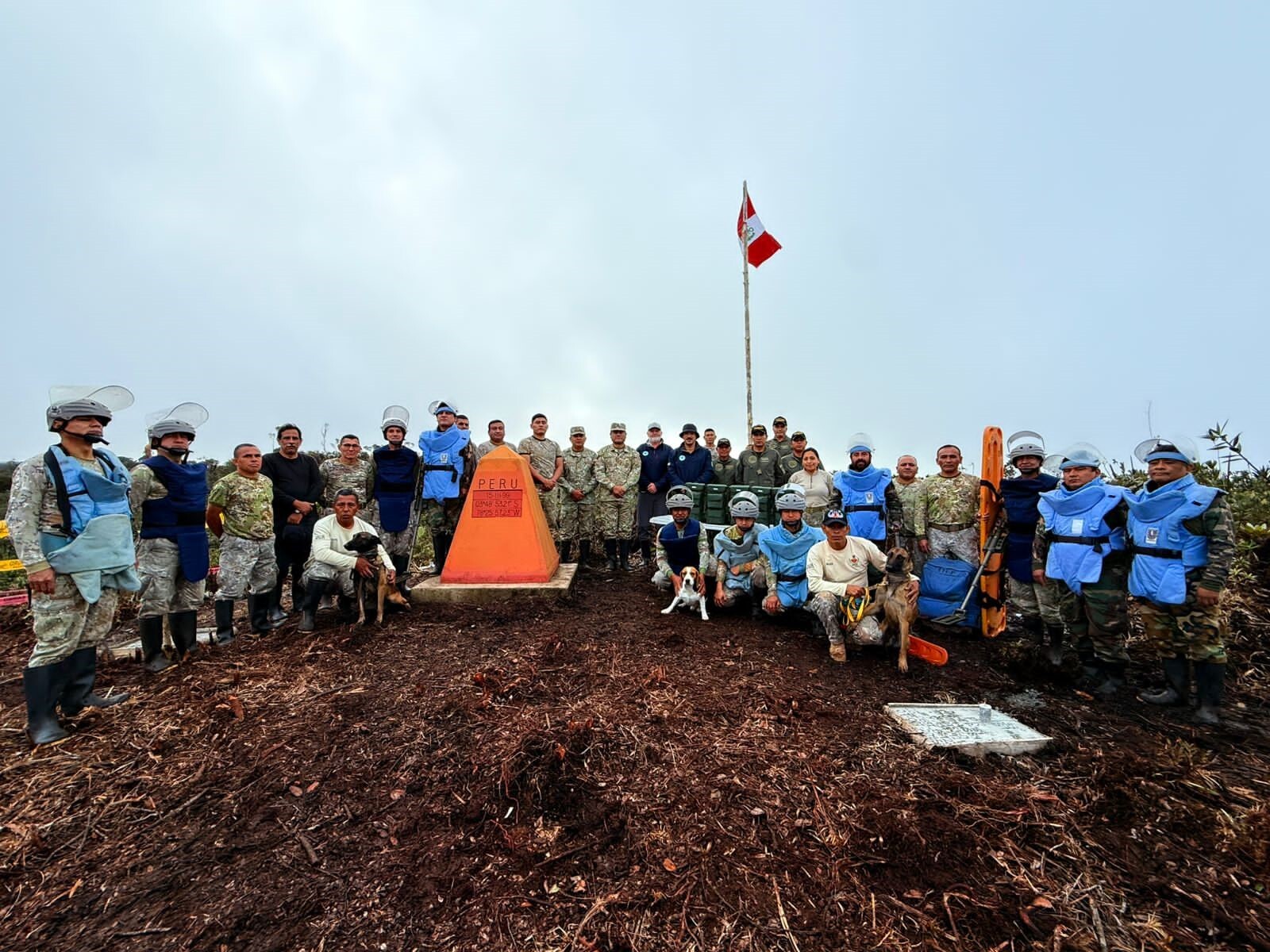
- In 2012, upon request of the Governments of Chile and Peru and using mine detection dogs (MDDs), NPA managed to liberate a territory of approx. 70,000 m2, allowing the demarcation of the border and marking the end of a long-standing territorial dispute between the two neighboring countries.
- In 2025, NPA Peru once again offered its support to Peru in its humanitarian demining efforts at the northern border with Ecuador. In this region of the Amazon rainforest, inhabited by Awajun indigenous communities, the impact of the presence of antipersonnel mines occurs in a territory protected by law, but environmentally seriously deteriorated by illegal mining and logging, and where illegal arms and drug trafficking furtherly undermine the social fabric and the rights of native populations, limiting their access to resources and chances to find livelihood alternatives to the criminal value chain.
Through capacity building and donation of essential equipment, NPA will continue to accompany Peru towards compliance with Article 5 of the APMBC before December 31, 2029. In order to consolidate the social and economic impact of land release in the areas of operations, NPA is planning to integrate support to local organizations and authorities especially in the sectors of climate resilience and food sovereignty.
Weapons and Ammunition Management
Surplus, obsolete and improperly stored weapons and ammunition have caused – in Peru and around the world – unplanned explosions, with fatal consequences among civilians. In addition, poor management of physical security and stockpiles often results in the diversion of weapons and ammunition that end up in illegal circuits, with equally devastating consequences for the population.
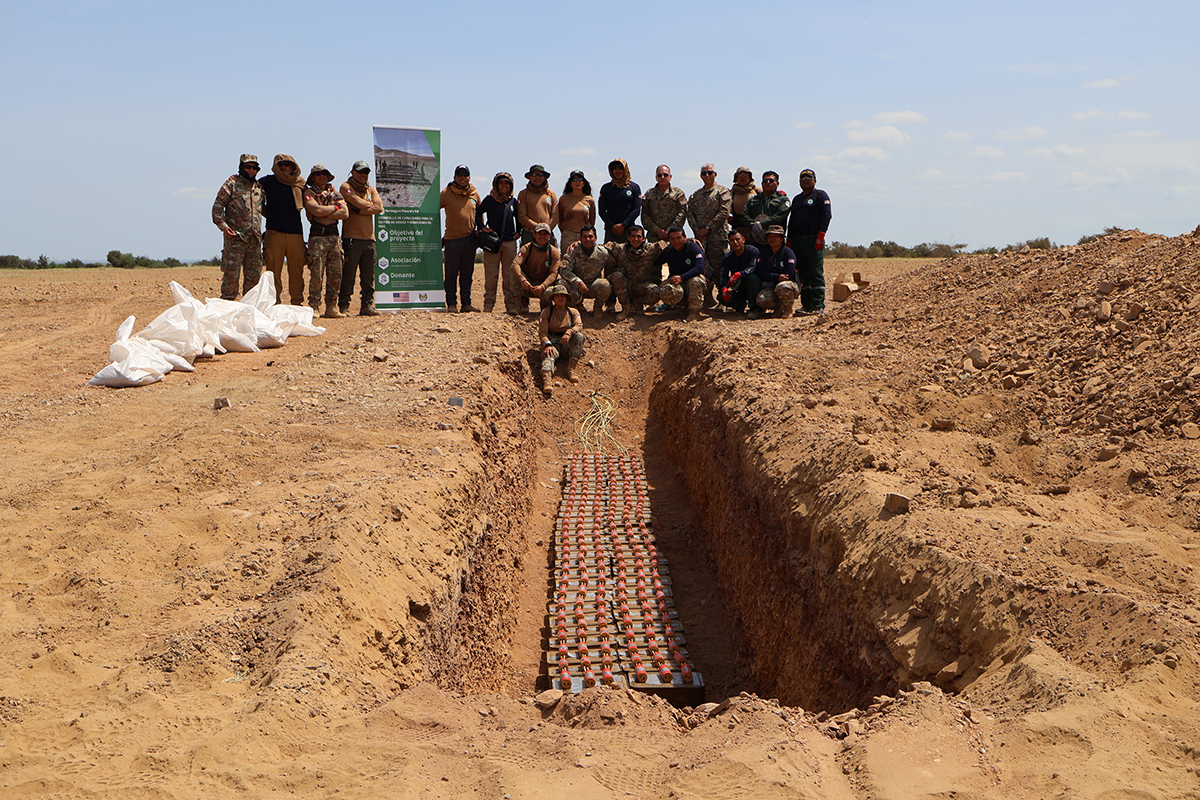
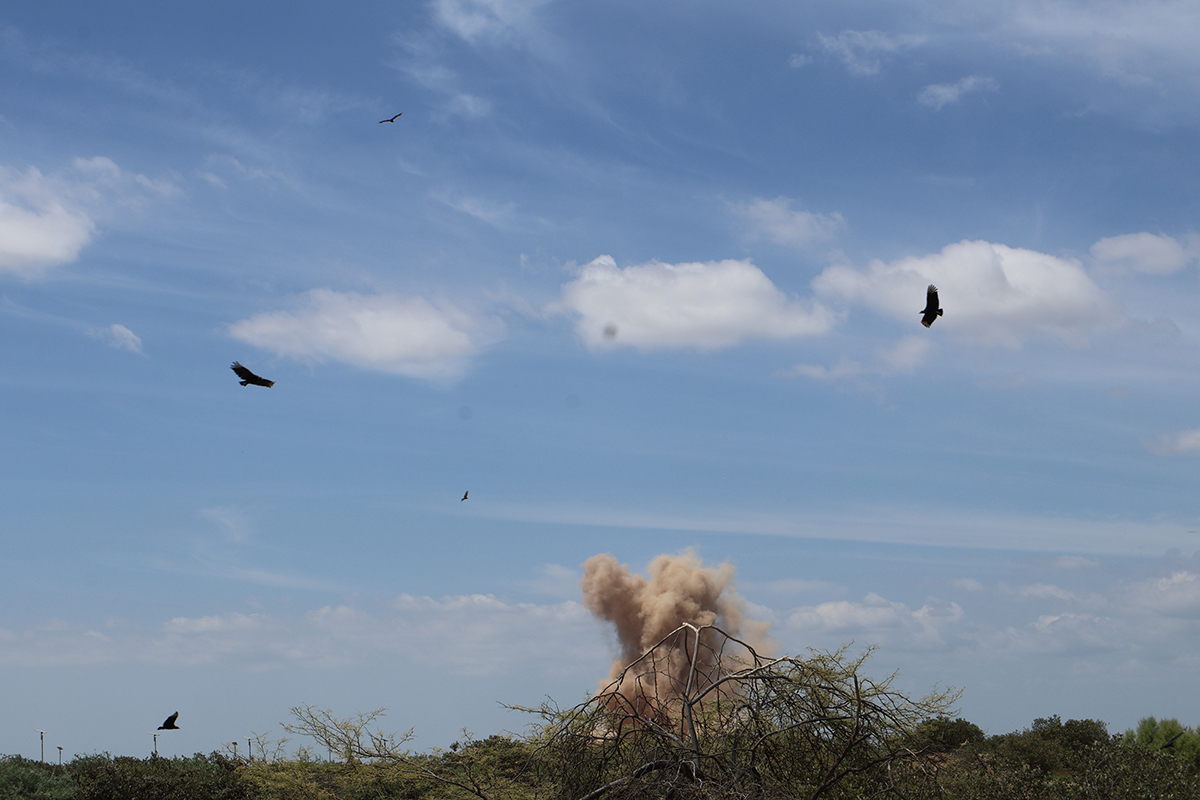
For this reason, since 2017 and to date, NPA's efforts in Peru have focused on supporting Peruvian Armed Forces to destroy hazardous and unstable weapons and ammunitions, in a context where the urbanization process expanding the urban centers closer to ammunition stockpiles poses civilians at a higher risk.
After destroying more than 400 tons of obsolete ammunitions between 2017 and 2023, since 2024 and thanks to the funding of the United States, NPA Peru has also been focusing on developing and strengthening technical knowledge and capabilities of the Armed Forces for a better management of their weapons and ammunition, in alignment with the Peruvian Ministry of Defense´s Strategic Plan fro weapons and ammunition management.
Cluster Munitions
- Thanks to the support received by NPA, on December 15, 2023, Peru officially became a cluster munition-free country. For almost ten years, NPA has provided technical assistance, logistical and financial support to the Peruvian Air Force, managing to destroy its entire stockpiled arsenal: 2,021 cluster munitions containing more than 150,000 submunitions. In this way, Peru could comply with its obligations under Article 3 of the Convention on Cluster Munitions.
NPA is committed to continuing to support humanitarian demining and arms and ammunition management in Peru, in order to protect civilians from any harm.
Facts
- Between 2020 and 2025, more than 50 people – mostly young students – have died in the context of protests against corruption and in defense of democracy
- In 2025, Peru has ranked 130th out of 180 countries for press freedom, according to Reporters Without Borders
- In 2024, Peru was classified as a "hybrid regime" and is ranked 78th out of 167 in The Economist's "Democracy Index"
- 44% of the gold exported by Peru comes from illegal mining. Every day, at least 100 tons of material with gold content leave the Province of Condorcanqui illegally for Ecuador
- Till 2025, 140,000 hectares of Amazon forest have been lost due to illegal mining. In the Province of Condorcanqui, deforestation is growing fast and expanding to the Santiago and Cenepa river basins
- Since 2020, at least 35 indigenous leaders have been killed in Peru for defending their territories and the environment
- It is estimated that there are more than 340,000 unregistered firearms in Peru, many of which feed the illegal circuits. The main illegal international exit routes are located at the norther border with Ecuador, in Amazonas and Tumbes departments
- 84% of homicides in Peru are committed with firearms
- Firearms increase sexual and gender-based violence in criminal contexts
- In the province of Condorcanqui, the SGBV is tragically reflected in child sexual violence – mainly against indigenous girls and perpetrated in school environments – with more than 800 cases reported in recent years compared to a total population of approx. 40,000 people
Further information