
States Parties Affirm: Ukraine’s suspension not allowed under the Anti-Personnel Mine Ban Convention
The Anti-Personnel Mine Ban Convention (APMBC) does not allow States Parties to suspend their obligations as it applies at all times and under any circumstances. Especially during armed conflict, the Convention is intended to protect civilians from the devastating impacts of anti-personnel mines.
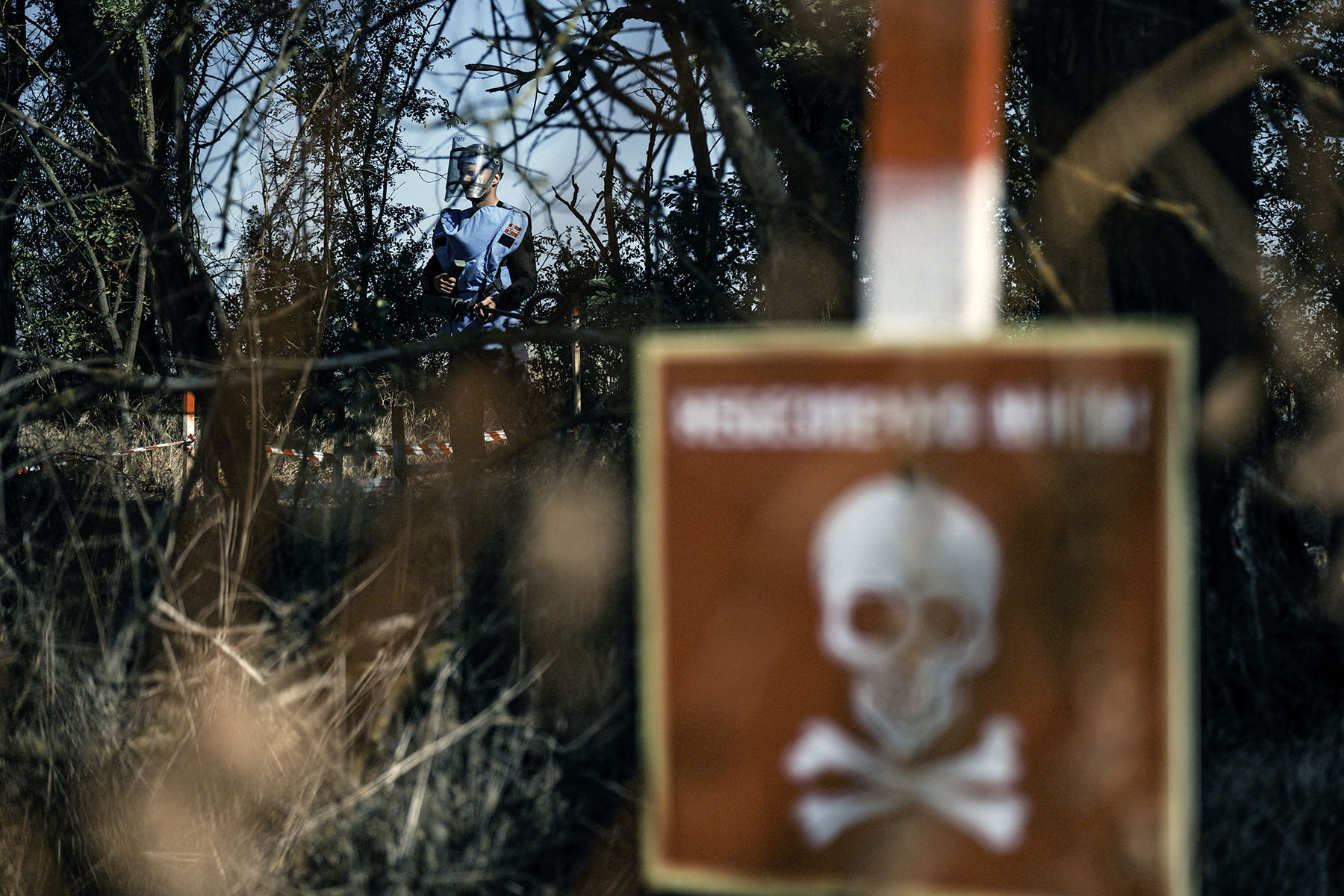
After challenging negotiations in Geneva last week, the Meeting of the States Parties to the APMBC reached a critically important conclusion: the Convention does not permit a state to “suspend” its obligations, as Ukraine announced on 18 July this year. The States Parties rejected Ukraine’s suspension and reaffirmed that the Convention’s obligations apply at all times, including during armed conflict.
“States have now made it clear that the Anti-Personnel Mine Ban Convention cannot be put on pause whenever deemed convenient. This is a necessary decision to preserve the integrity of the Treaty and international law and ensure the protection of civilians,” says Director for NPA’s International Department, Rune Dale-Andresen.
Several States Parties, including Norway, Belgium, Austria, Switzerland, New Zealand and Colombia submitted formal objections against Ukraine’s suspension to the UN Secretary-General.
The Final report adopted by the Twenty-Second Meeting of the States Parties affirms: “The Convention does not allow the suspension of its operation and consequently its obligations.”
The Meeting confirmed that Ukraine remains to be bound by its obligations and called upon the country to further engage within the framework of the Convention.
A Victory for Civil Society
Throughout the Meeting, civil society organizations repeatedly underscored the need for a clear stance regarding Ukraine’s suspension. In several plenary interventions, NPA called on States Parties to unequivocally reject suspensions under the Convention and warned of the consequences of allowing temporary exemptions, stressing that such a precedent would undermine not only the APMBC but all disarmament treaties and international law.
“Had States accepted a ‘suspension’ it would have opened a back door for countries to set aside their legal obligations in wartime – precisely when those obligations are meant to apply and when civilians need protection the most,” Dale-Andresen says.
Read NPA’s statements at the 22nd Meeting of States Parties here:
A Treaty Under Pressure as Civilians Suffer at Levels Not Seen for Years
The Anti-Personnel Mine Ban Convention is a cornerstone of international humanitarian law. It prohibits the use, production, transfer, and stockpiling of anti-personnel mines. It has saved countless lives since its adoption in 1997 and contributed to the near-global cessation of the use of such weapons.
In recent years, however, this positive trend is facing challenges. The latest Landmine Monitor reports a renewed increase in deaths and injuries caused by anti-personnel mines and other explosive ordnance, as well as the highest recorded use of anti-personnel mines since 2011.
Russia’s extensive use of anti-personnel mines in Ukraine has made the country one of the most mine-contaminated in the world. Vast areas are affected, and even with significant efforts of clearance operators. Including NPA, clearance is expected to take several decades.
In this context, several of Russia’s neighboring countries – Estonia, Finland, Latvia, Lithuania, and Poland – have announced their withdrawal from the APMBC. These unprecedented steps have been condemned by humanitarian actors and regretted by numerous States Parties that called on the withdrawing states to reverse the decision.
An outdated weapon that leaves trauma for generations
Anti-personnel mines do not differentiate between soldiers and civilians. They continue to kill and maim for decades after they are laid, while harming children, farmers, and humanitarian workers. Historically, some 80–90% of all mine victims have been civilians. In 2024, 90% of all recorded casualties were civilians and almost half of them were children.
“No war is won with a weapon that primarily harms the civilian population. Defending the Anti-Personnel Mine Ban Convention is protecting lives, human rights, and the long-term safety of countless people,” Dale-Andresen concludes.
NPA's statements at the 22nd Meeting of States Parties

NPA Statement on Universalization during the 22 MSP for the Anti-Personnel Mine Ban Convention

Joint Statement: General exchange of views during the 22 MSP for the Anti-Personnel Mine Ban Convention
