
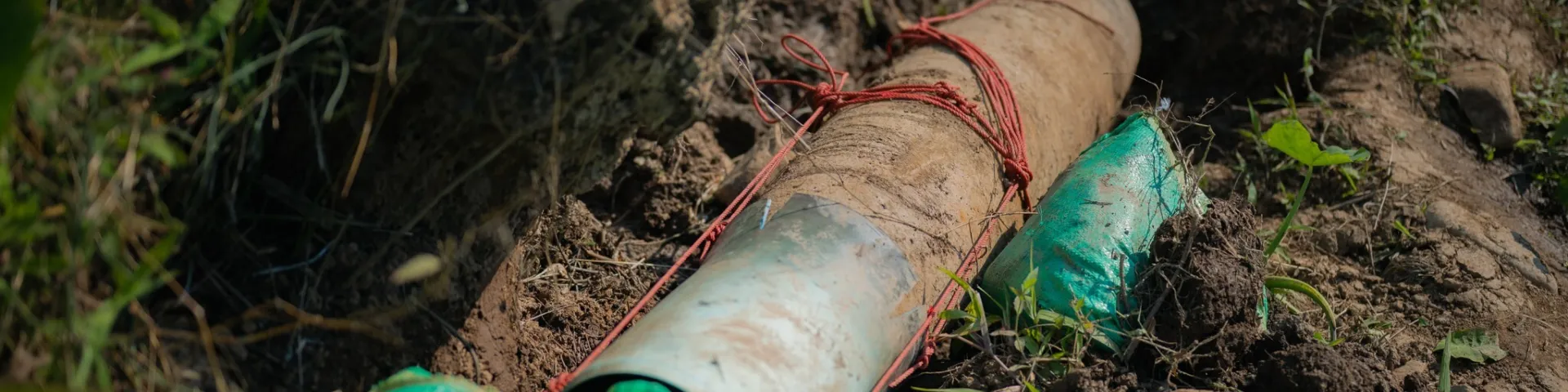
A four-hour journey from Sekong town leads to Songkhone Village, Kaleum District, a remote farming community where unexploded ordnance (UXO) contamination has quietly shaped daily life for years.
For Mr. Tad, a farmer and father, the danger began in 2007. While Tad was clearing land to grow rice, he discovered a bomb buried along the edge of his paddy field.
“I didn’t dare touch it,” said Mr. Tad. “I only covered it with soil, marked the spot and warned my children, grandchildren and nearby villagers not to go near it. I was afraid the children might step on it and it would explode,” he recalls.
With 14 family members living together, including children and grandchildren, the threat was constant. Yet for many years, the bomb went unreported. Mr. Tad did not know that reporting UXO was possible, or how to do it safely.
That changed when Norwegian People’s Aid (NPA) conducted Exploded Ordnance Risk Education (EORE) in Songkhone Village. Through one-on-one session at his house, he learned to recognize different types of UXO and, crucially, how and where to report them. During the session, Mr. Tad informed the NPA-EORE team about the bomb in his rice field.
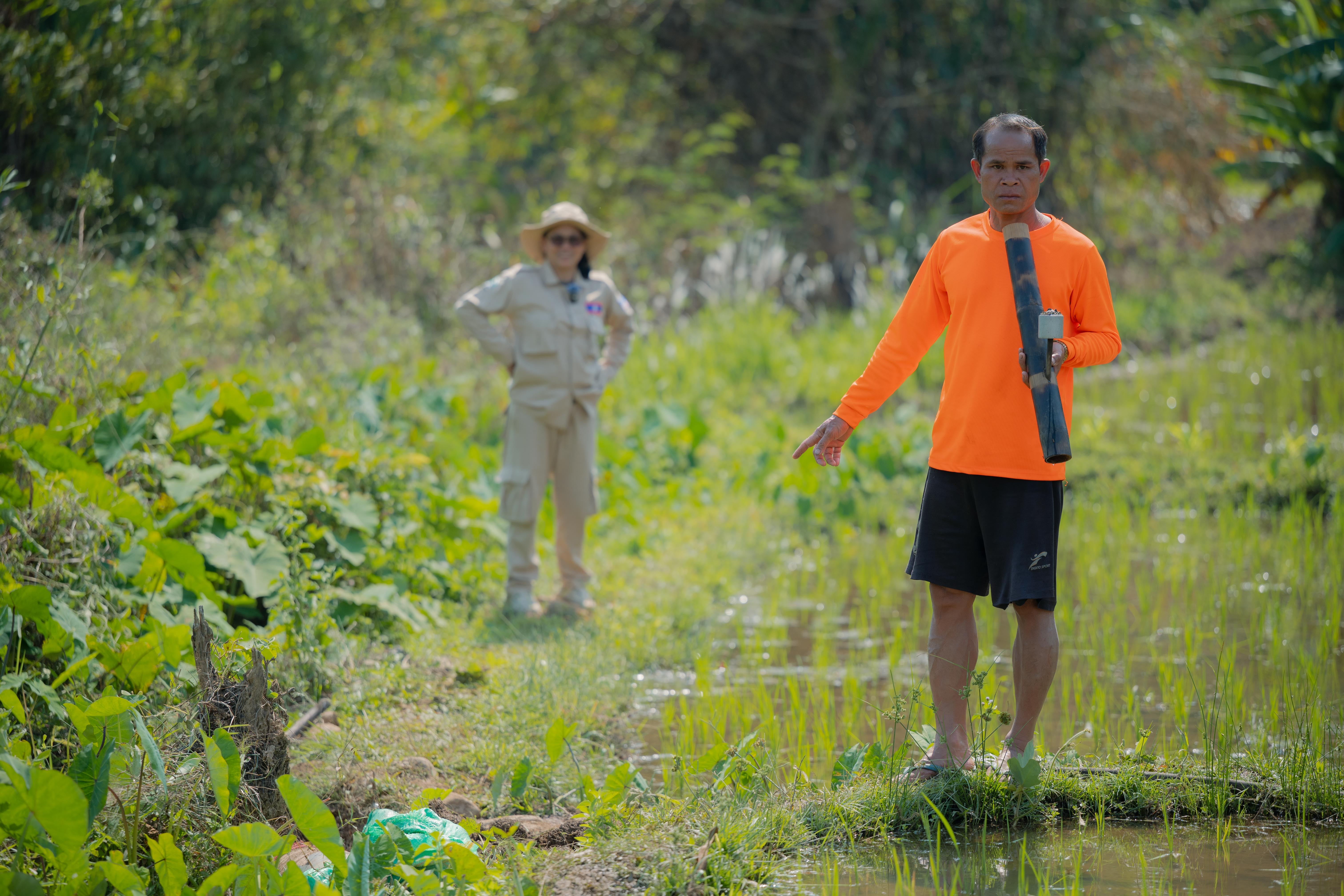
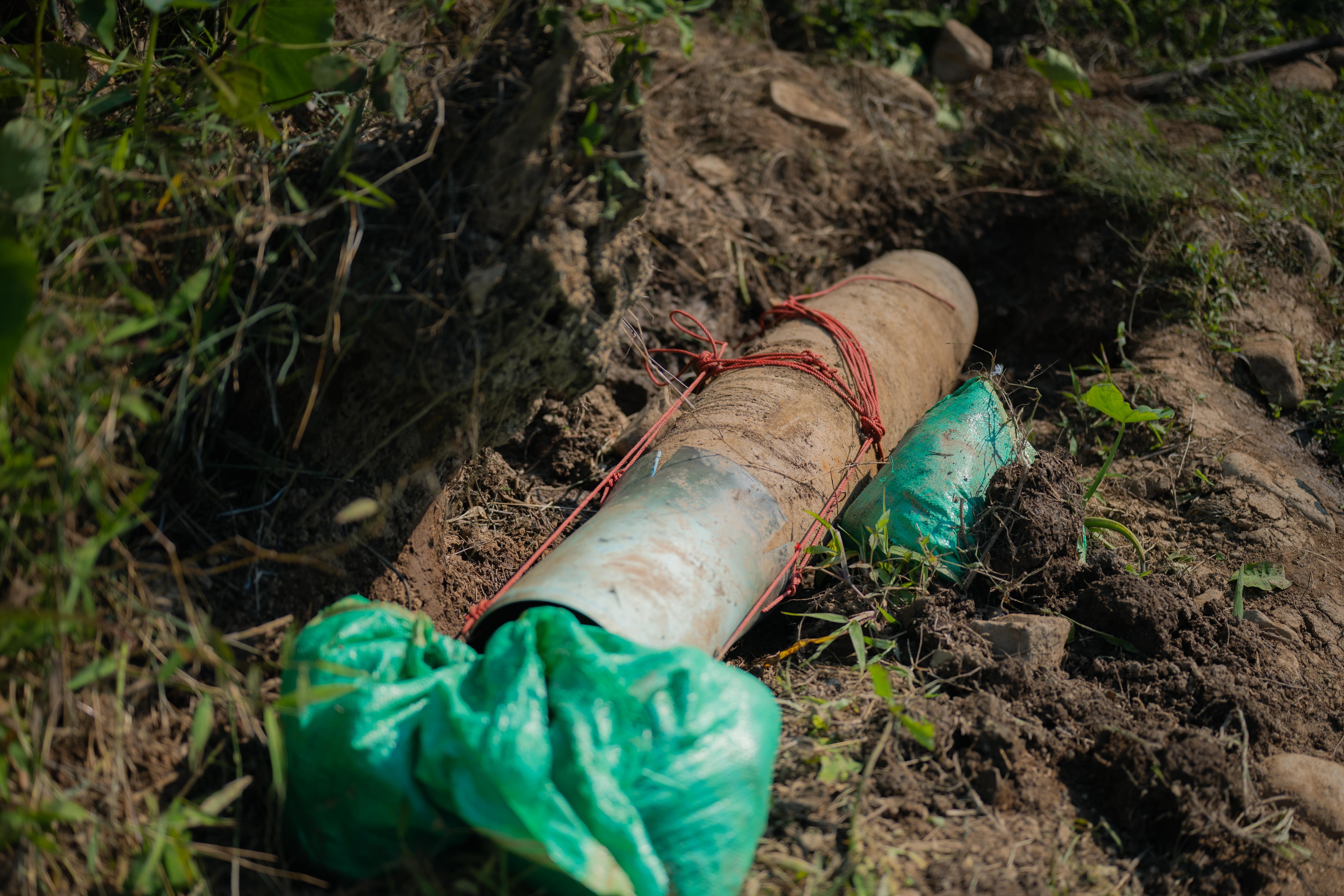
The response was immediate. The EORE team collected information, marked the location, and reported it to their line supervisor.
In early February, NPA’s Roving team arrived and conducted a full risk assessment, advising the family and nearby residents to stay away while further assessment took place.
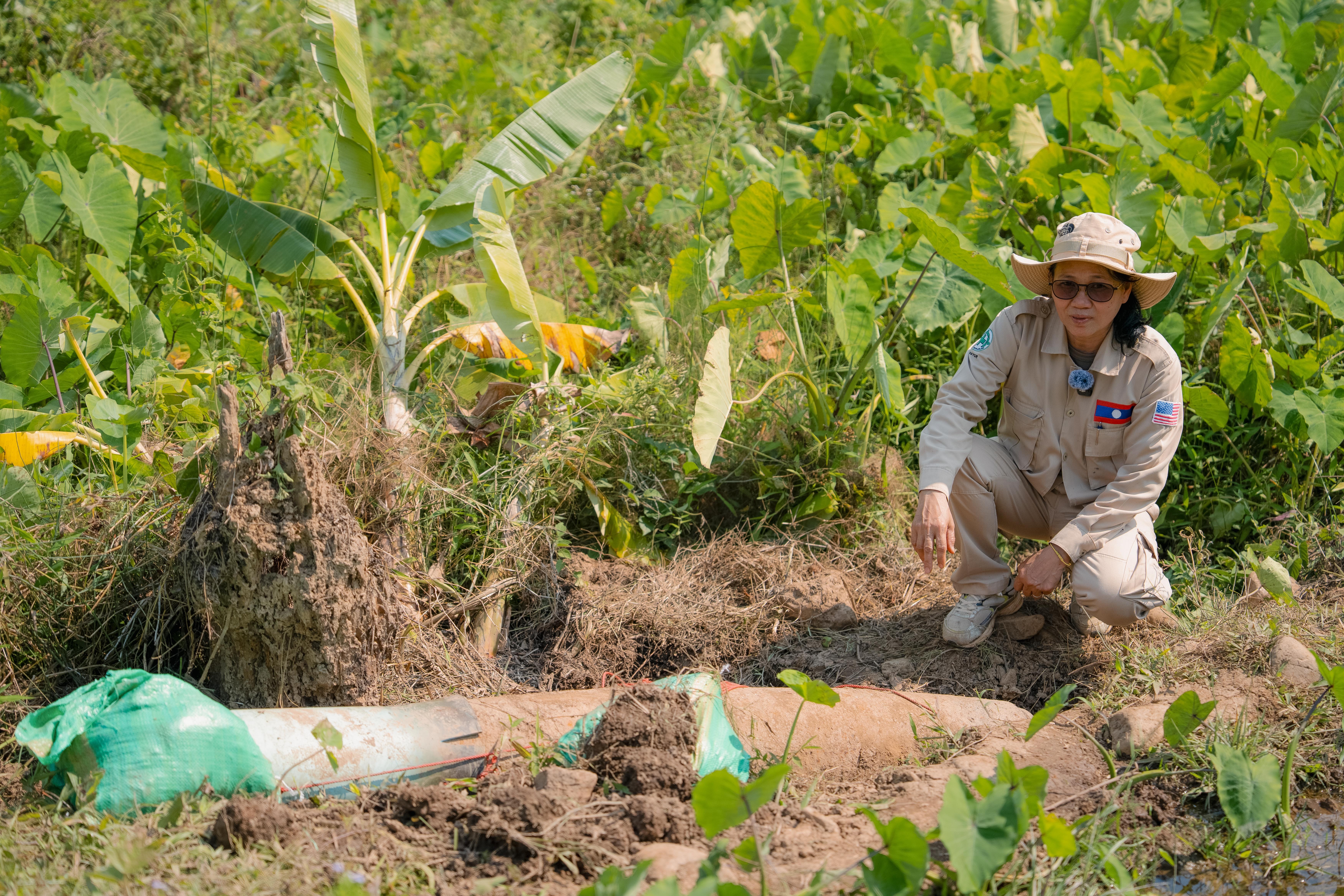
“The bomb was located very close to houses, rice huts and livestock,” explains Mrs. Vanhny Southasy, Technical Operations Coordinator. “Destroying it in place would have posed a serious risk to people and property, so relocation and safe disposal were necessary.”
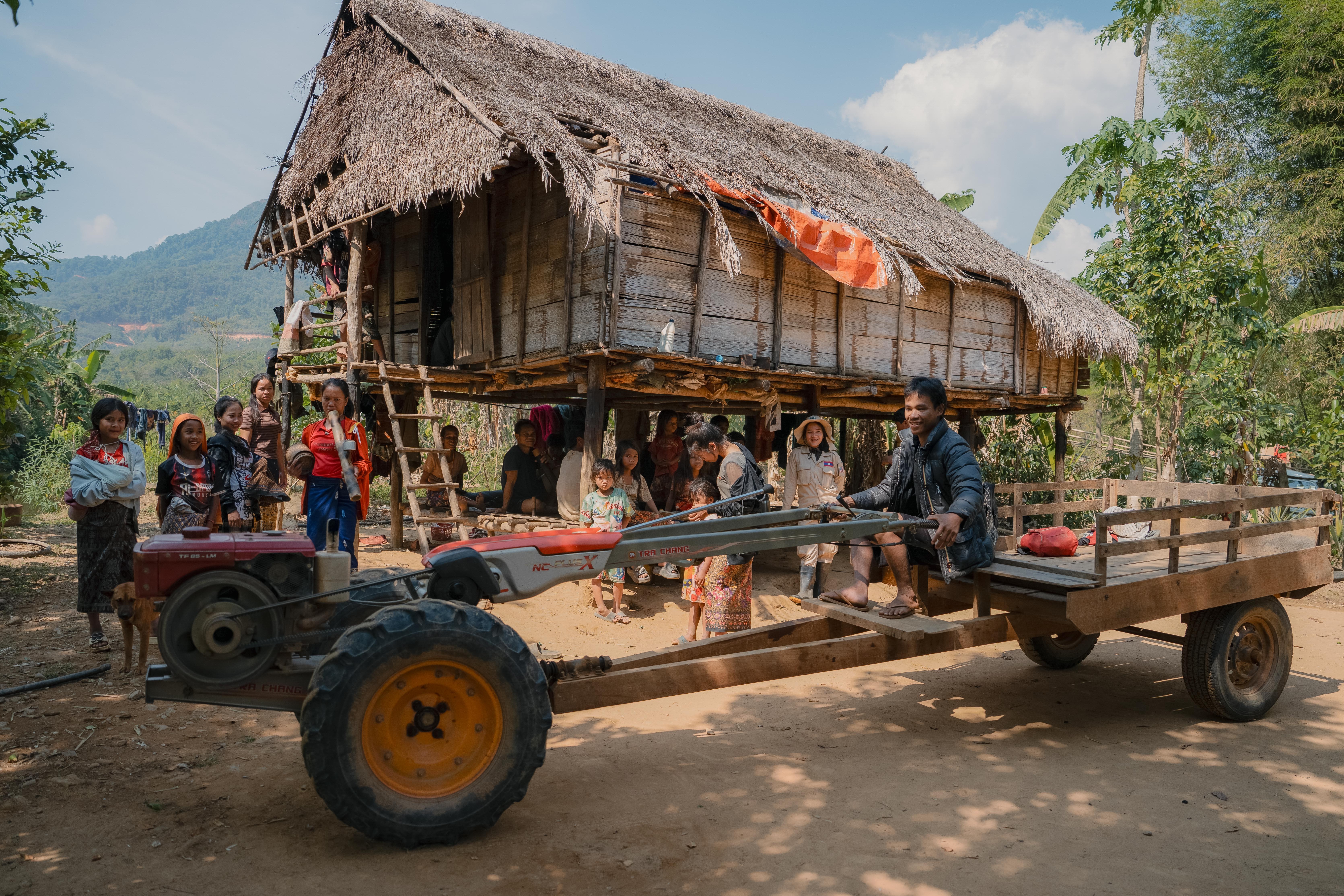
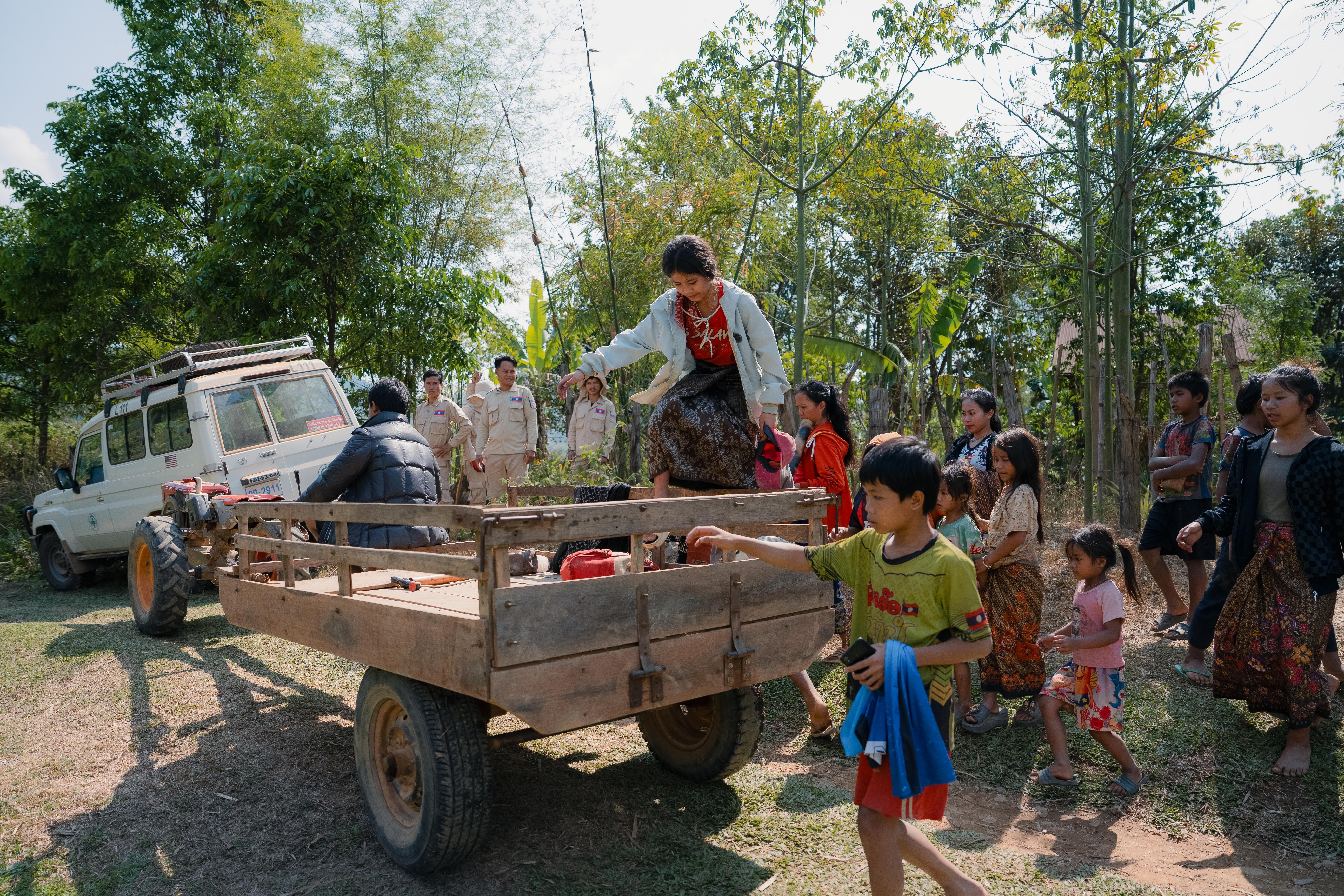
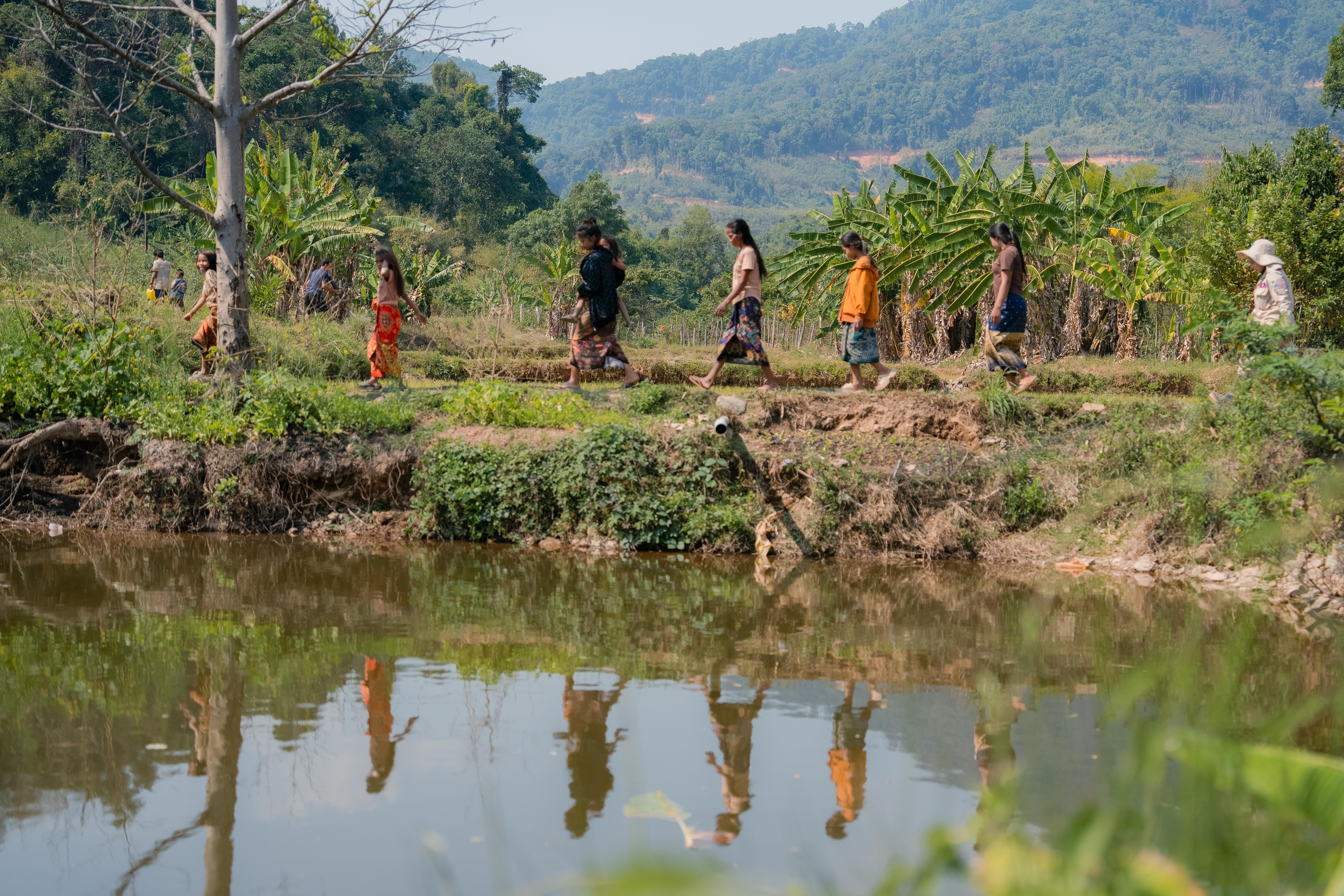
On 8 February, the UXO was safely destroyed by the NPA team. For Mr. Tad and his family, the impact was immediate and deeply emotional.
“We feel relieved and happy. My children and grandchildren are happy too. We’re no longer afraid,” he says. “Before, we only farmed on one side of the land because we were afraid of the bomb. Now that it’s gone, we can expand our rice fields.”
Previously, the family harvested about 60 sacks of rice per year across two growing seasons. With the land now safe, they expect to expand cultivation by approximately three hectares, increasing their harvest by at least 30 additional sacks annually.
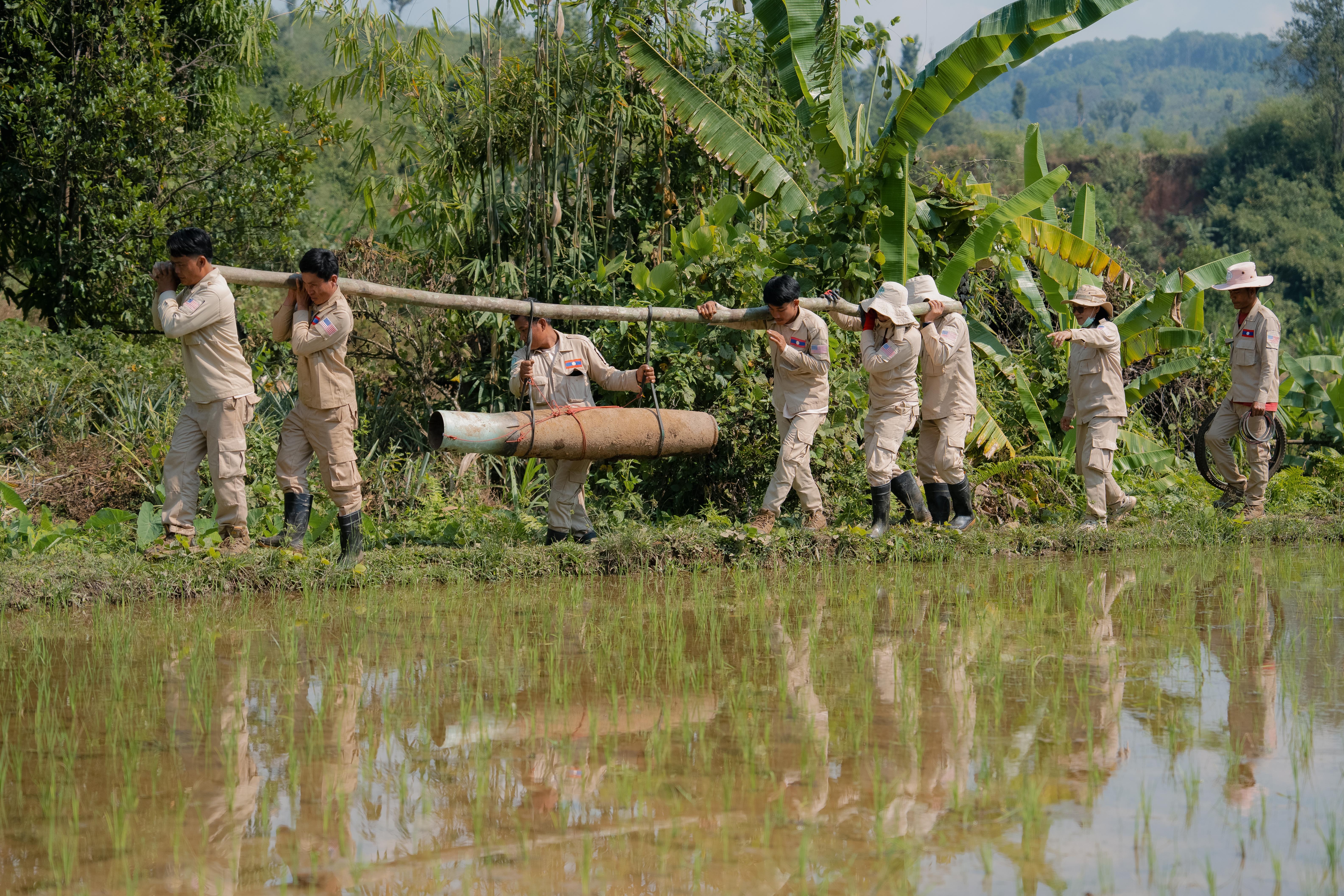
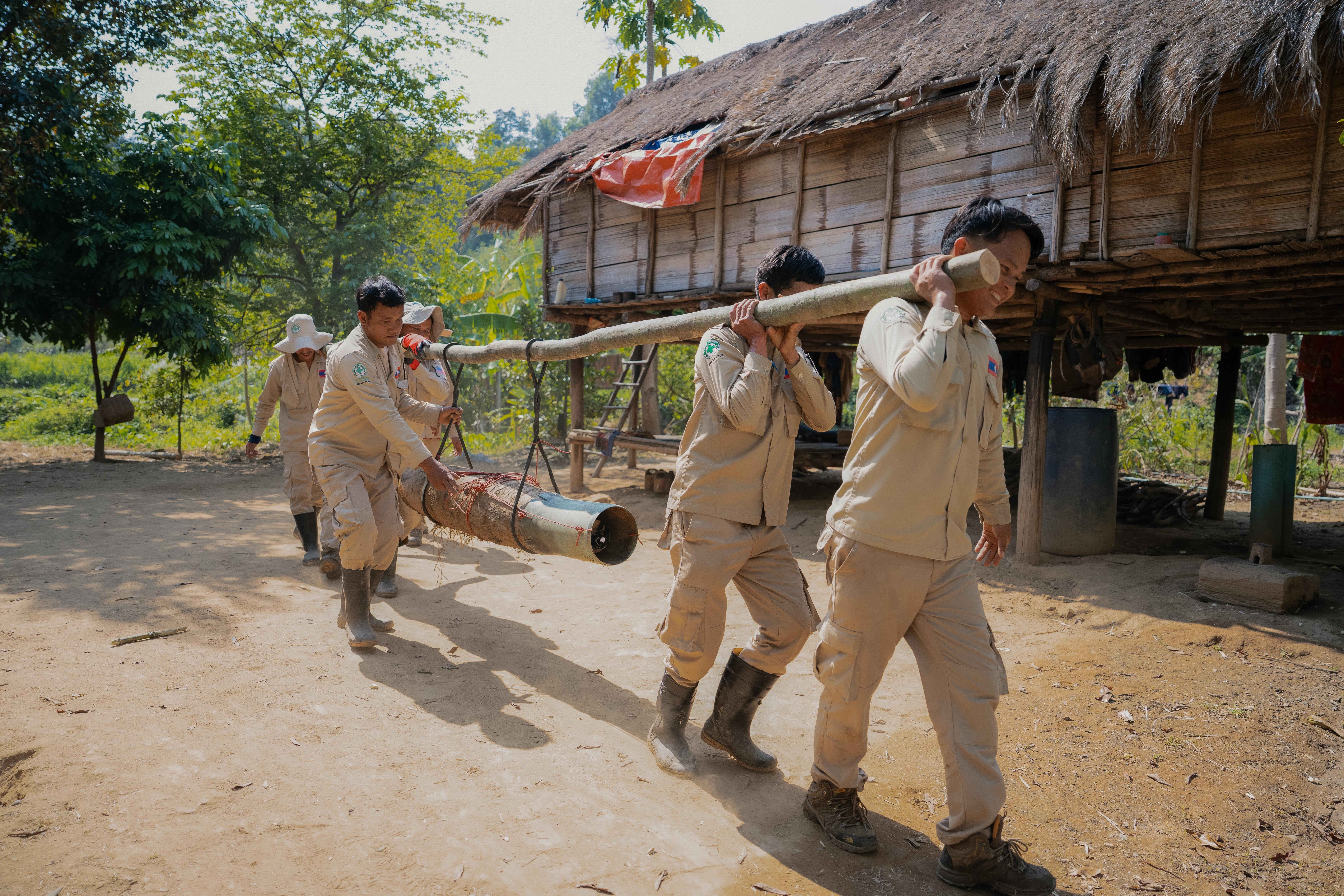
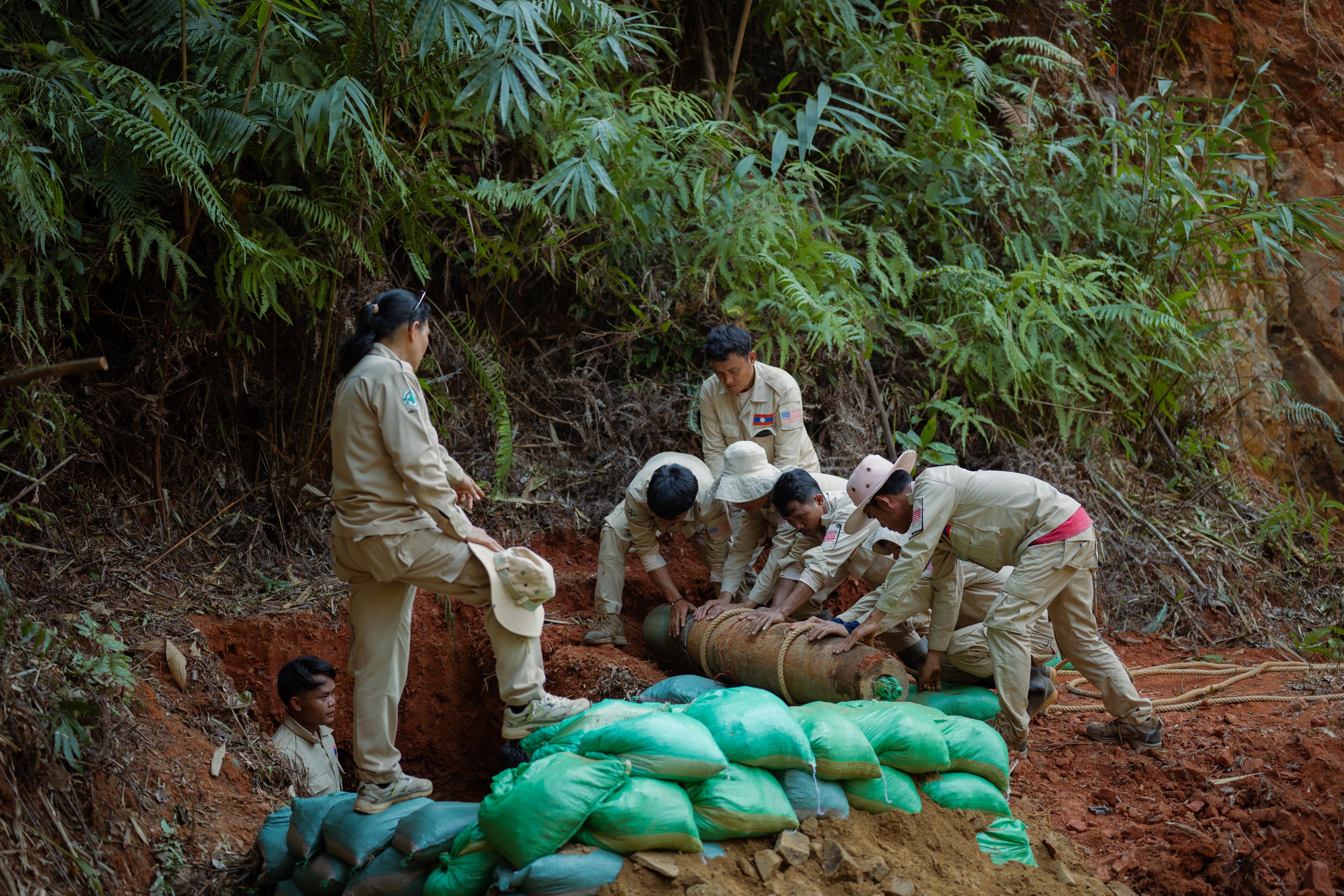
“Beyond one family, the clearance has delivered wider community benefits. The operation reduced risk for 33 households, 14 rice barns and 196 people living in the surrounding area,” said Mrs. Vanhny.
As reported by local villagers in Songkhone village, five aircraft bombs have been discovered in total. Our roving team will continue preparations for the next demolition.
Through EORE activities, communities are gaining the knowledge to protect their families and report dangers.

NPA sincerely thanks the Government of the United States for their continued support. The support allows families to farm safely, protect their children, and plan for a more secure future.