
Lebanon joins the Mine Ban Treaty amid war and invasion
While several European states are withdrawing from the Mine Ban Treaty citing security concerns linked to Russia, Lebanon has chosen the opposite path. Amid an ongoing invasion, the country has decided to join the international ban on anti-personnel mines, reinforcing the global norm against weapons that continue to kill and injure civilians long after conflicts end.
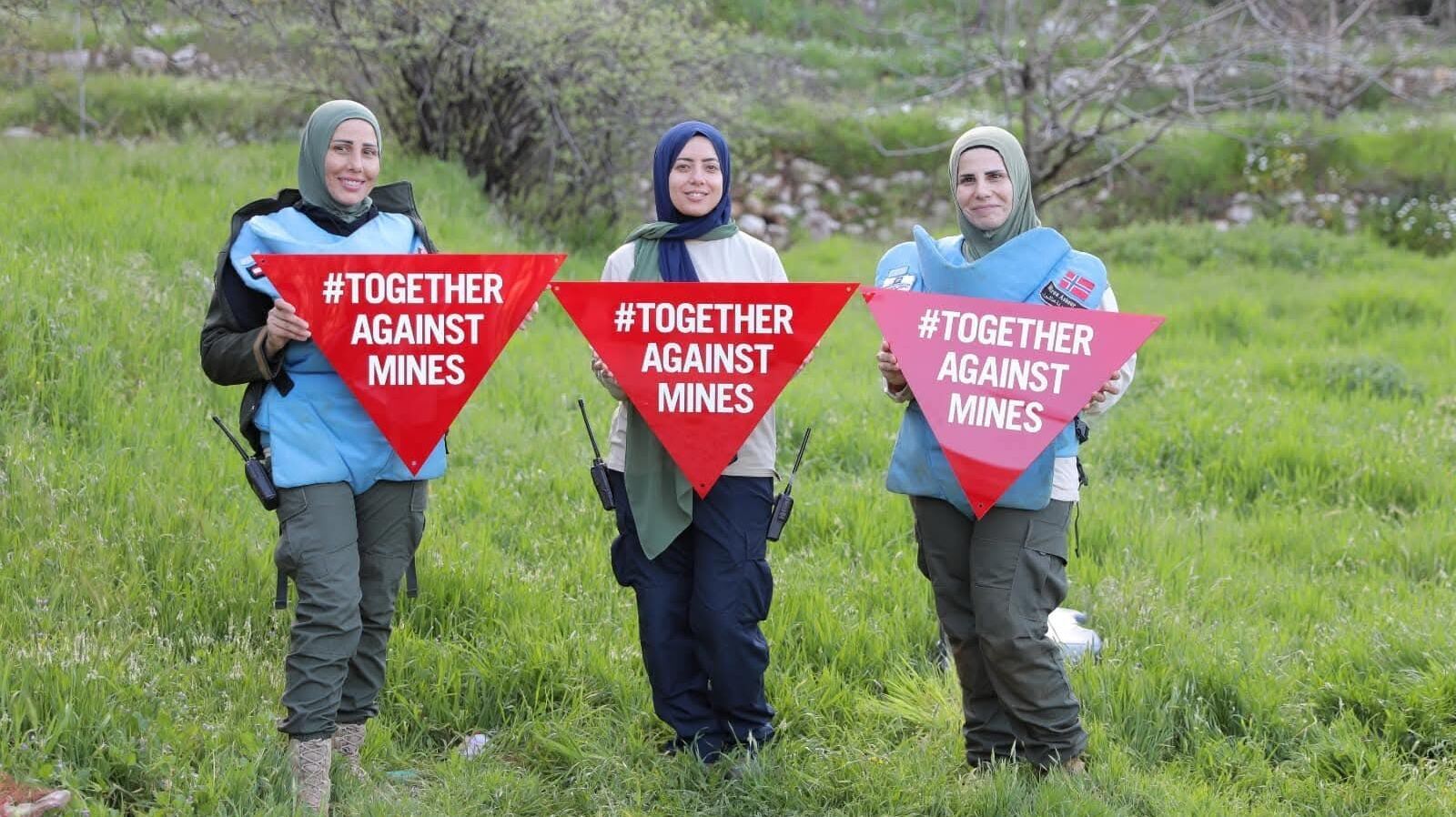
– This is a powerful signal from Lebanon, a country that knows better than most the devastating long-term humanitarian consequences of anti-personnel mines. Affected states understand the human cost of these weapons better than anyone, and precisely for that reason Lebanon has chosen to strengthen the norm against them, not weaken it, says Secretary General of Norwegian People’s Aid, Raymond Johansen.
NPA has worked in mine action in Lebanon for 20 years and has extensive experience documenting the impact of landmines, cluster munitions and other explosive remnants of war on civilians and communities.
– We have seen firsthand how mines prevent families from returning home, children from playing safely, and communities from recovering long after conflicts end. These deadly remnants of war continue to kill and injure civilians for decades after active fighting has stopped. That is why Lebanon’s decision is so significant, says Johansen.
Lebanon has for decades been heavily affected by landmines and explosive remnants of war as a result of repeated conflicts and is acutely aware of the long-term humanitarian consequences these weapons inflict.
– The fact that a country facing invasion chooses to join the Mine Ban Treaty demonstrates the continued strength and relevance of the international norm rejecting anti-personnel mines, says Johansen.
According to Johansen, Lebanon’s decision stands in sharp contrast to Estonia, Latvia, Lithuania, Poland and Finland, which have recently announced their withdrawal from the treaty prohibiting anti-personnel mines.
– The European states that have taken this alarming step justify their withdrawals by referring to the need for enhanced border security. I hope they take note that Lebanon is now moving in the opposite direction, because it knows that anti-personnel mines do not stop invasions or win wars. Instead, they primarily inflict fear, suffering and long-term harm on civilians, while leaving behind contamination that takes years, often decades, to address, says Johansen.
He warns that recent developments show that humanitarian norms are increasingly under pressure internationally.
– The Mine Ban Treaty remains one of the most important humanitarian disarmament agreements ever adopted and a cornerstone of international humanitarian law. Lebanon’s decision is an important reminder of why these conventions exist in the first place: to protect civilians from unacceptable harm, says Johansen.
The Mine Ban Treaty was adopted in Oslo in 1997 and is widely regarded as one of the most successful humanitarian disarmament agreements of modern times.
