
NPA calls for renewed commitment to the Convention on Cluster Munitions in Africa
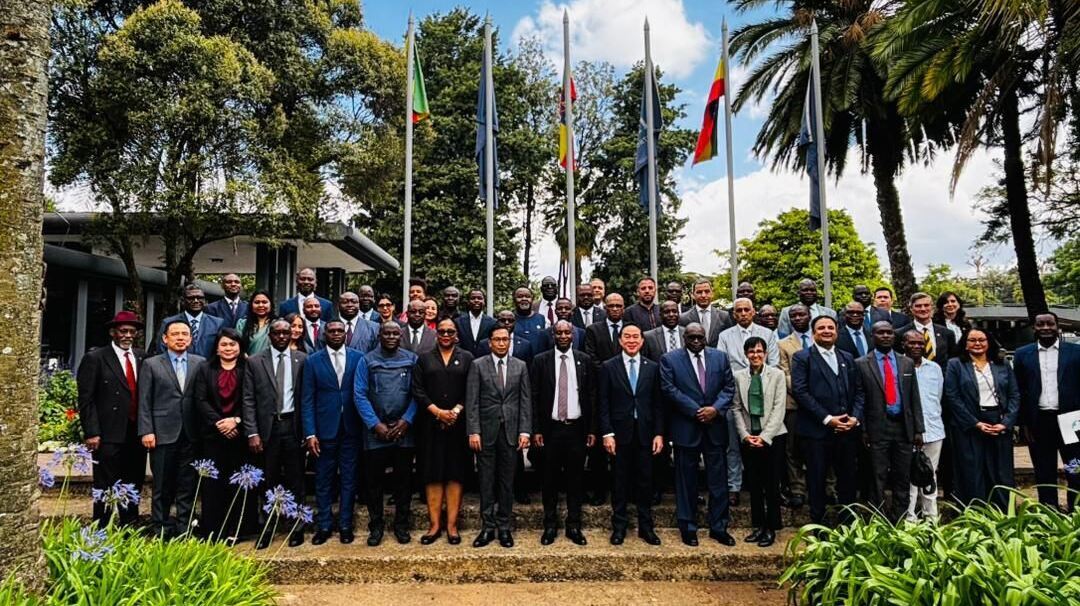
Norwegian People’s Aid (NPA) today joined governments, international organisations, and civil society representatives from across Africa at a regional workshop on the universalization of the Convention on Cluster Munitions (CCM), hosted in Addis Ababa.
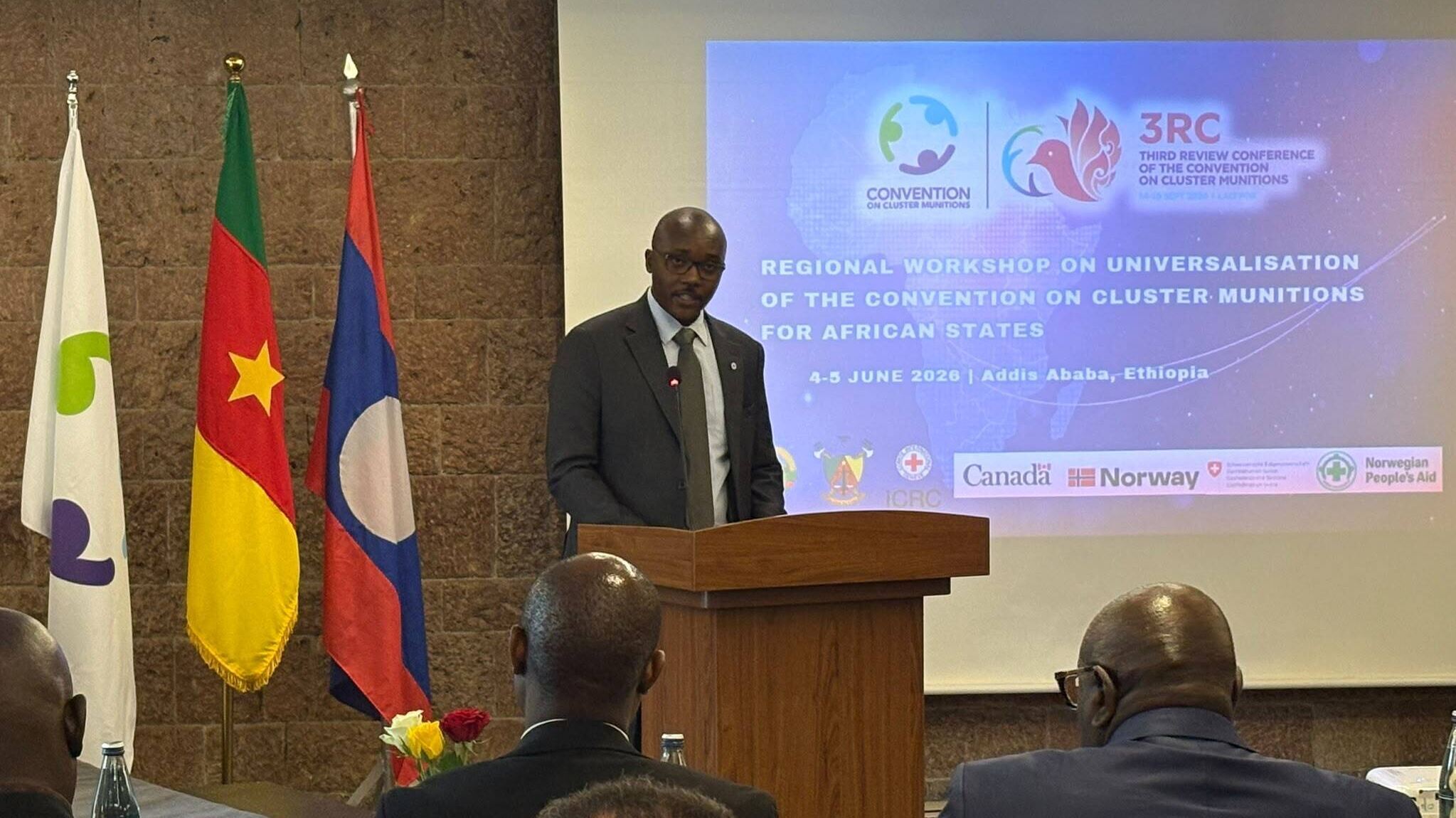
Representing NPA, Robert Iga Afedra, Country Director for Angola, highlighted the humanitarian consequences that led to the adoption of the Convention and called on African states to continue leading efforts to strengthen and expand the treaty.
“The Convention on Cluster Munitions was created in response to the unacceptable humanitarian harm caused by these weapons,” said Afedra. “Its purpose was not only to address existing contamination and suffering, but also to prevent future humanitarian crises.”
The workshop brought together African states and key stakeholders to discuss progress towards universalization of the Convention, which prohibits the use, production, transfer and stockpiling of cluster munitions. As of May 2026, 124 states have joined the Convention’s framework, including 112 States Parties and 12 signatories.
Evidence that shaped the treaty
During his intervention, AFEDRA recalled the evidence-based process that led to the adoption of the Convention in 2008. He highlighted research conducted by NPA and partners on the M85 cluster munition, which challenged claims that so-called “safer” cluster munitions equipped with self-destruct mechanisms could eliminate humanitarian risks.
The findings demonstrated a significant gap between testing conditions and real-world performance, helping to shape negotiations that ultimately resulted in a comprehensive ban rather than restrictions based on technical specifications.
“The distinction between ‘safe’ and ‘unsafe’ cluster munitions remains fundamentally flawed,” Afedra said. “All unexploded submunitions pose risks to civilians and can continue to threaten communities long after conflicts have ended.”
A critical moment for humanitarian disarmament
NPA also warned against recent efforts by some states to question or weaken established humanitarian disarmament norms.
Afedra noted that recent arguments about the military utility of cluster munitions and claims of technological improvements should be approached with caution and assessed against decades of operational evidence from affected countries.
“Policy decisions should be guided by evidence and field realities, not rhetoric,” he said. “The humanitarian consequences of cluster munitions remain unchanged.”
An opportunity for Africa
Africa currently has 36 States Parties, eight signatories and ten states not party to the Convention. According to Mine Action Review, Africa is the world's second most cluster munition-affected region after Asia and the Middle East, with eight confirmed contaminated states.
At the same time, contamination levels in most affected African countries remain relatively limited, presenting a significant opportunity for progress.
“Most affected African states have contamination levels that are manageable if there is sufficient political commitment and support,” Afedra said. “Universalization, clearance of contaminated land, and destruction of stockpiles can help ensure that future generations are protected from the devastating impact of these weapons.”
He also highlighted the potential for stronger South-South cooperation, allowing African states to share expertise and build national capacity to address contamination and implement treaty obligations.
Decades of experience in affected countries
Over the past three decades, NPA has cleared cluster munition remnants in more than 20 countries worldwide, including Botswana, Mozambique, South Sudan, Zambia and the Democratic Republic of the Congo.
Drawing on this experience, NPA reiterated its commitment to supporting African states in joining and implementing the Convention, including through stockpile destruction, clearance of contaminated land, and capacity development.
“We have seen first-hand the long-term consequences of cluster munitions on communities, livelihoods and development,” Afedra concluded. “No state would wish to have these weapons on its territory. That is why universalization of the Convention remains as important today as ever.”
