
The scale of the global mine and explosive ordnance challenge exceeds the resources available to address it. Innovation can help us work more efficiently, improve safety and make better use of limited resources.
Norwegian People’s Aid works with technology companies, research institutions and other partners to develop and test solutions that can make mine action safer, faster and more effective.
Turning technology into practical solutions
Our innovation work focuses on real operational challenges – from improved use of dogs, distinguishing explosives from harmless metal and improving protective equipment, to using drones, advanced sensors and better data to support land release
Our innovation partners
NPA currently works with ROFI Industries, MRead, Equanostic, BioDrone, NEO and Copenhagen Hazard Mapping on different technological and operational challenges. The Geneva International Centre for Humanitarian Demining (GICHD) manages the Innovation HUB and coordinates innovation activities.
ROFI – better protection for deminers
Development is driven by operational needs and includes prototyping, field testing and continuous improvement. New designs aim to reduce weight and improve ventilation and visibility while maintaining the protection needed for hazardous work. The equipment is also designed with different body types in mind.
NPA and ROFI have worked together since the mid-1990s to develop protective equipment for deminers, including body armour, protective aprons and vests.
Supported by Innovation Norway.

MRead – distinguishing explosives from harmless metal
Metal detectors are essential tools in mine clearance, but they can generate large numbers of signals from harmless metal objects. Investigating each signal takes valuable time.

NPA is working with MRead on a non-intrusive system designed to help determine whether a detector signal is associated with explosive material before excavation begins. The technology uses magnetic resonance radio-frequency spectroscopy to identify specific substances.
Supported by Innovation Norway.

BioDrone – drones and AI for mine action
BioDrone combines aerial imagery with artificial intelligence to analyse large areas from the air. Its platform manages the process from uploading and processing imagery to AI-assisted analysis.
Technology originally developed for applications such as forestry is now being adapted to support the detection of landmines and unexploded ordnance. The approach is already being used operationally in Ukraine and is being expanded to Iraq.
Supported by Innovation Norway.
Equanostic – seeing below the surface
Equanostic combines physics, signal processing and machine learning to analyse sensor data. Its technology includes a 3D scanner using synthetic aperture radar and visual-analysis tools that can turn sensor streams into real-time representations of patterns and anomalies.
The aim is to extract information that conventional approaches may not reveal and improve the interpretation of data from multiple sensors.
Supported by the Research Council of Norway.
NEO – combining advanced sensors
NPA, NEO, Norce and other European research and development partners are exploring drone-mounted systems combining several types of advanced sensors.
The work brings together hyperspectral imaging, lasers, LiDAR and spectroscopy, with the aim of improving rapid detection and assessment of hazardous areas.
Funding pending.
Copenhagen Hazard Mapping – smarter use of mine action data
Copenhagen Hazard Mapping develops decision-support systems for mine action.
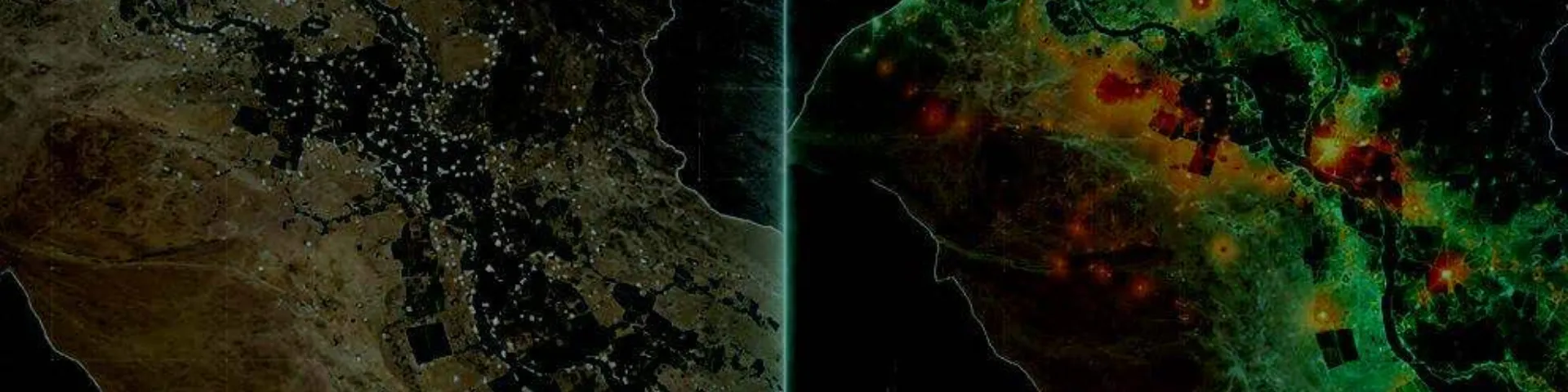
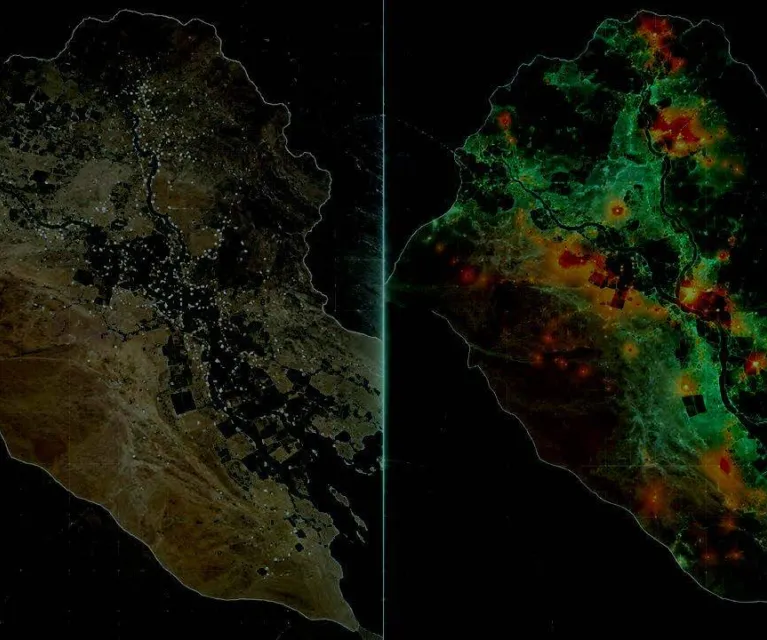
Using data from NPA’s programme in Iraq, CHM and NPA are working to develop an advanced digital platform to support the design and implementation of land release.
With needs exceeding the resources available, mine action must continually find safer, smarter and more efficient ways of working. By bringing together operational experience, technology and research, NPA aims to turn promising ideas into practical solutions that improve how we find and address explosive ordnance.